What Is a Microcurrent Facial? The Honest Answer
What a microcurrent facial is, how it feels, how long the lifted look lasts, and…
Why regrowth feels different, who should skip it, and how often to book, from Nios Skin Lab's estheticians.
Does dermaplaning make hair grow back thicker? No—not thicker, darker, or faster. The blade cuts peach fuzz at the skin’s surface and never reaches the follicle, which is what decides how a hair grows. What changes is the tip: a cut hair has a blunt end, so regrowth can feel stubbly for a while. Here’s why, when new hair is a different story, and who should skip it.
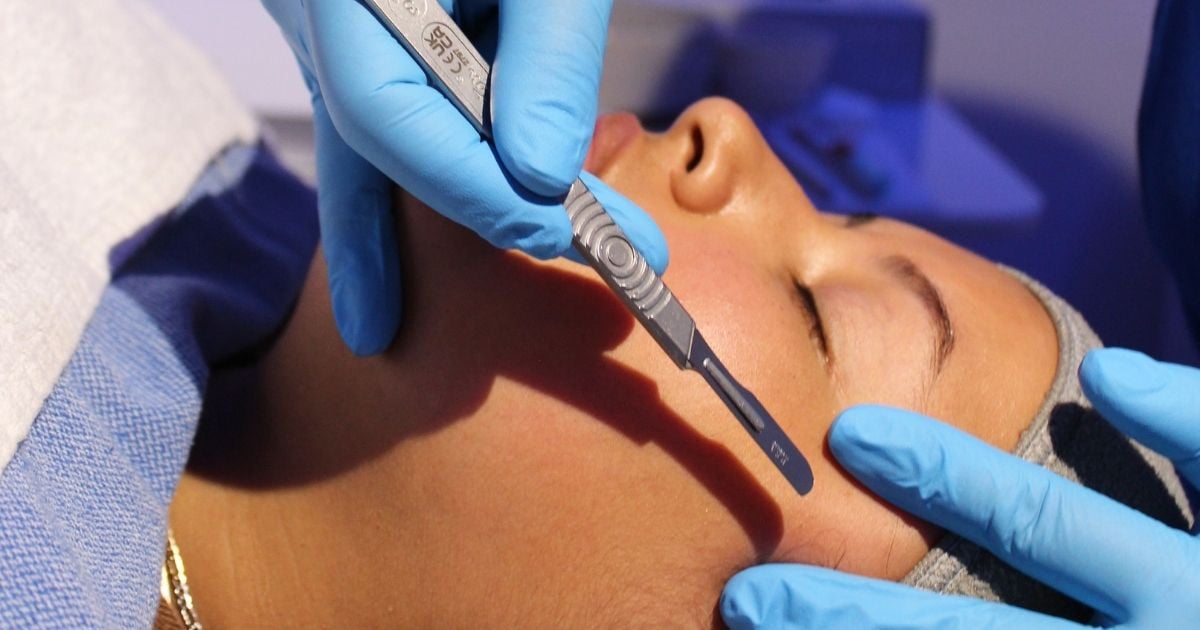
Everything that decides a hair’s thickness, color, and speed happens below the surface, in the follicle. Dermaplaning works above it. In a dermaplaning facial, a sterile blade glides across the skin and lifts two things: the top layer of dead skin cells and the fine, soft hair most of us call peach fuzz.
That fuzz is vellus hair. Cleveland Clinic describes it as thin, short, light hair that grows on most of the body, and states plainly that peach fuzz doesn’t grow back thicker after you remove it. What does turn soft vellus hair into coarser, darker terminal hair is hormones—the rise in androgens at puberty is the familiar example. A blade can’t send that signal.
Mayo Clinic makes the same point about razors in general: shaving doesn’t change a hair’s thickness, color, or rate of growth. Dermaplaning is, mechanically, a very careful version of the same cut.
Because the hair has a new shape at the top, not a new nature at the root.
An uncut vellus hair tapers to a fine point. The blade slices straight across it, leaving a flat, blunt end. As that hair grows back, the blunt tip is what you feel, so it can feel a little prickly at first. Mayo Clinic notes that during this grow-out phase hair can look more noticeable—even darker or thicker—without actually being either. Against freshly smoothed skin, any regrowth is simply easier to spot.
Once the hair grows out, it softens again. A dermatologist at Cleveland Clinic puts it the same way in their guide to dermaplaning at home: trimming hair above the skin has no effect on how it grows. We took apart the razor version of this myth in does shaving make facial hair thicker, if you want the longer story.
Sometimes the hair really is changing—just not because of the blade.
If you’re noticing coarser, darker hairs along the chin, jaw, or upper lip, that’s terminal hair, and its usual driver is hormonal. Cleveland Clinic describes hirsutism as thick, dark hair growing where hair is normally fine and light, most often linked to higher androgen levels. Mayo Clinic’s advice is simple: a sudden increase in facial hair is worth raising with your doctor, since it can be a medication side effect or a sign of something underlying.
The timing can be confusing. If those changes start around the same time you begin dermaplaning, it’s easy to blame the blade. The blade isn’t the cause—and it isn’t the right tool for coarse hair either, because those hairs regrow quickly and visibly.
That’s where electrolysis comes in—for the hairs themselves, not whatever is behind them. Electrolysis is permanent hair removal: it destroys each treated follicle’s growth center, so those hairs don’t grow back. New hair can still appear with age or hormonal changes. Our guide on how to get rid of peach fuzz walks through when to smooth the fuzz and when electrolysis makes more sense.
For what it’s built to do, yes. It takes off peach fuzz and a layer of dead surface cells, so skin feels smoother and makeup sits differently. What it doesn’t do is touch the follicle, so the fuzz comes back—Cleveland Clinic calls the hair removal only a temporary fix.
Here’s how it compares with two methods people often weigh it against:
| Dermaplaning facial | Razor at home | Electrolysis | |
|---|---|---|---|
| What it removes | Peach fuzz and dead surface skin | Hair at the surface | Each treated hair at the follicle |
| Reaches the follicle? | No | No | Yes |
| Does hair grow back? | Yes, same thickness and color as before | Yes, same thickness and color as before | Treated follicles don’t grow back |
| Best for | Smooth skin, a makeup-ready surface | Quick touch-ups | Permanent hair removal for coarse, dark hairs |
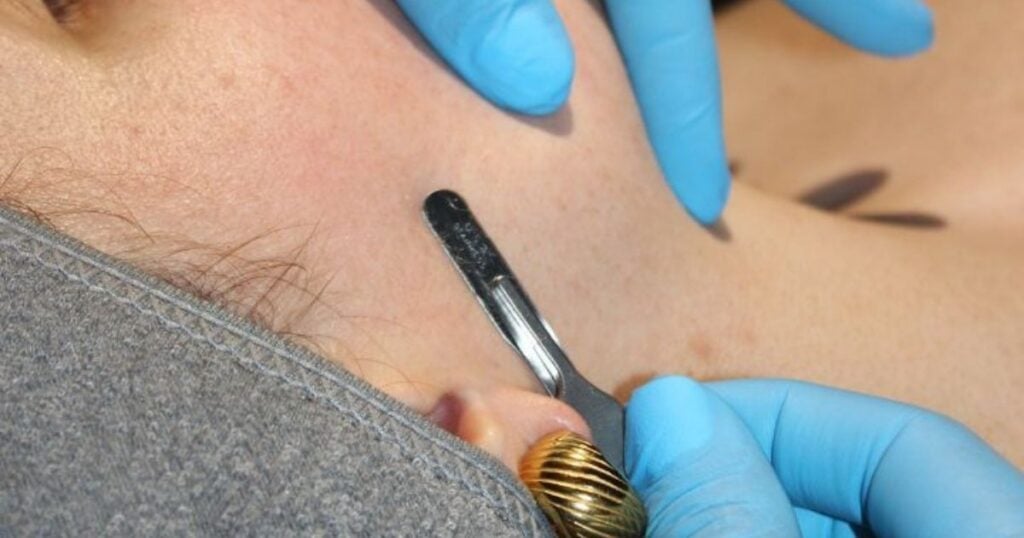
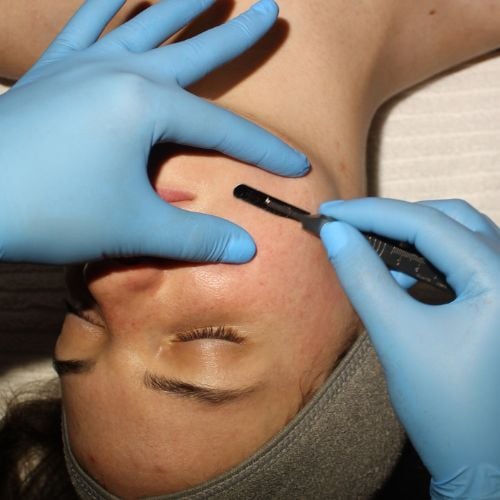
The blade is sterile and single-use: one blade, one client, every time. Your licensed esthetician works the whole face in one slow, unhurried pass, and the dead skin and fuzz come off together. If you book the full facial, extractions, a serum, and a hydrating mask follow on the freshly smoothed surface.
The real test doesn’t happen in the room. It happens the next morning, at your own makeup mirror, when foundation goes on without catching on fuzz or flakes.
A few things we hold to:
Usually not. Cleveland Clinic calls dermaplaning generally safe as a cosmetic procedure. Some redness, swelling, or tenderness afterward is normal and short-lived. The risks Cleveland Clinic and WebMD list are breakouts, small cuts, infection, scarring, and skin discoloration, which is why a sterile blade and good timing matter.
Between them, the two also flag these as reasons to hold off, or to check with a doctor first:
If you use a retinoid, tell us when you book—there’s a waiting period. If your skin is flaring on the day, your esthetician will suggest rescheduling or a gentler facial instead.
Most clients book every four to six weeks. WebMD says every three to four weeks; we lean a little longer, and your esthetician will set the rhythm with you based on how your skin responds.
More isn’t better here. The skin on your face is more delicate than skin elsewhere on your body, and Cleveland Clinic’s dermatologist advises against dermaplaning at home more than once a week. For more on finding the right pace across all exfoliation, see how often should you exfoliate.
No. The follicle sets the color, and dermaplaning doesn’t reach it. Regrowth can look darker for a while because the blunt tip is more visible against smooth skin, then it blends back in as it grows.
Partly. Both cut hair at the surface, so neither changes how it grows. Dermaplaning also lifts the top layer of dead skin cells, which is where the smoother feel comes from.
You can, but coarse chin hairs grow back fast and visibly, and they’re often a sign of hormonal change rather than peach fuzz. If those hairs bother you, electrolysis is the alternative. Treated follicles don’t grow back. New hair can still appear with age or hormonal changes.
The fuzz comes back the way it left: soft, fine, and the same as before. What you get in between is a smoother surface and a makeup mirror that behaves. Our licensed estheticians do dermaplaning facials at all our studios: Columbus Circle, Brooklyn by Barclays Center, and Astoria. When you’re ready, book your visit.