Does Dermaplaning Make Hair Grow Back Thicker? Short Answer: No
Why regrowth feels different, who should skip it, and how often to book, from Nios…
What a microcurrent facial is, how it feels, how long the lifted look lasts, and who should skip it. An honest guide from Nios Skin Lab's licensed estheticians.
What is a microcurrent facial? A facial that runs a very low electrical current across your face through small probes or conductive gloves. What you get is a temporary lifted look: brow, cheeks, and jawline that look more defined in the mirror the same day, usually for a few days. Here’s what happens, what it can and can’t do, and who should skip it.
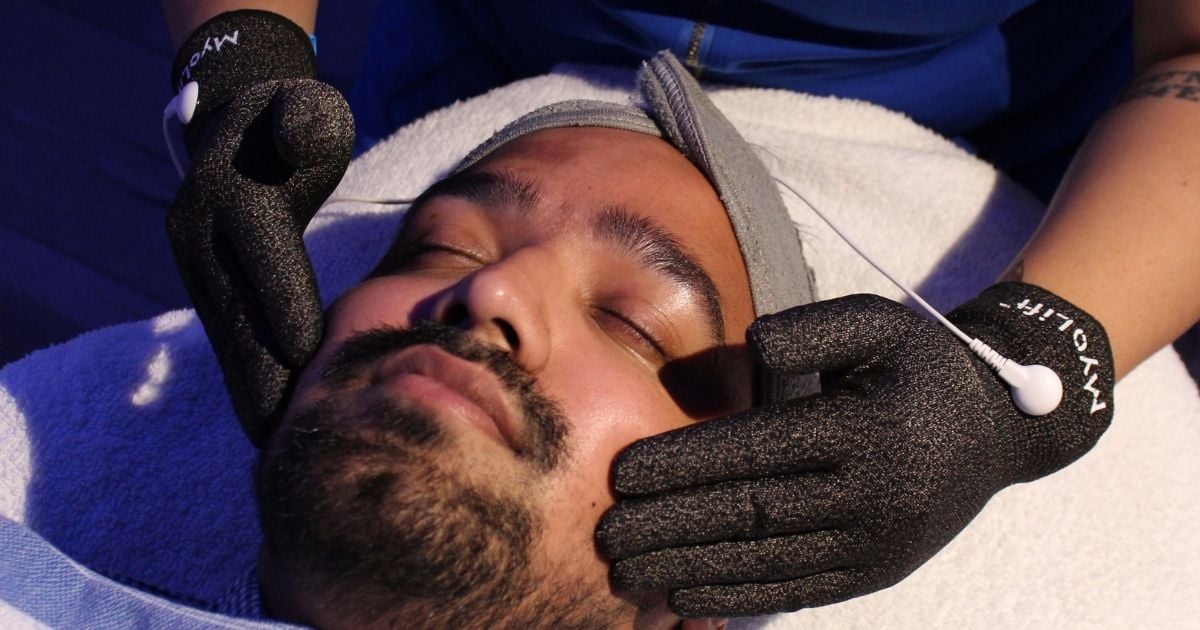
It starts like most facials: clean skin and a quick read of what your face is doing today. Then your esthetician works the current along the brow, the cheek, and the jaw, in one of two ways:
The current itself is tiny. Microcurrent works in the microampere range, about a thousand times lower than the milliamp-range current of a TENS unit, according to a 2025 narrative review. Many devices run below the level most people can clearly feel, as science educator Michelle Wong explains.
So what does it feel like? Mostly a gentle tingle. Now and then someone notices a faint metallic taste. We mention it before we start, so it doesn’t come as a surprise. It should never sting.
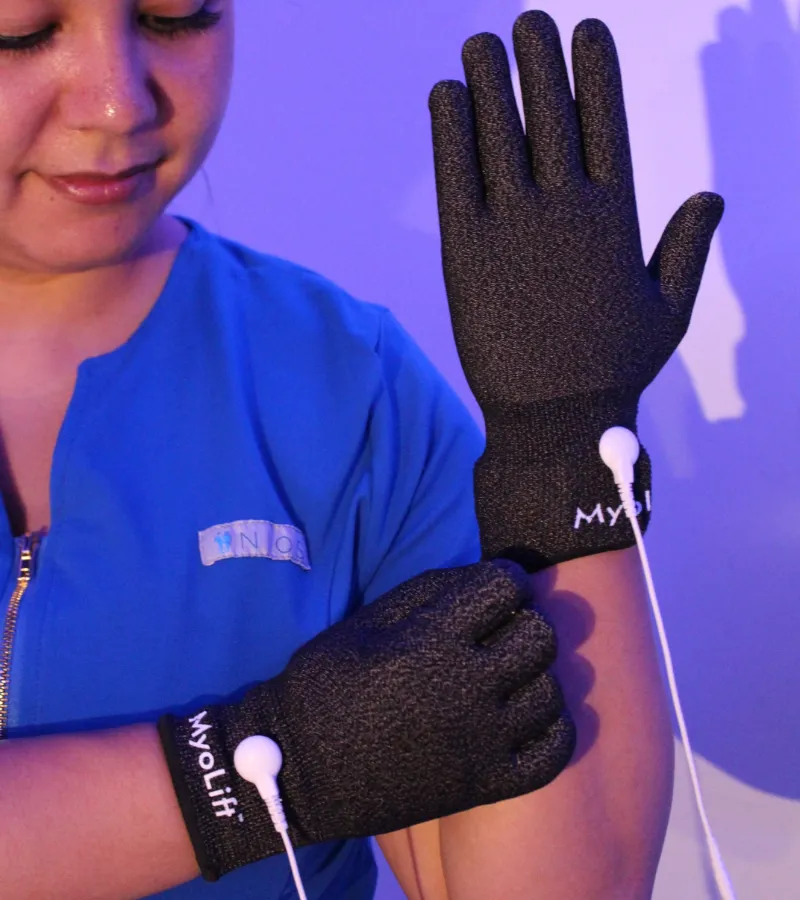
A microcurrent facial can give you a visibly lifted, more defined look that you see before you leave the room. It can’t change the shape of your face for good, and it isn’t a facelift.
The lifted look is real, and it’s temporary. Think of a great blow-dry: you see it, other people see it, and it isn’t meant to last the month.
The research is still small, and worth knowing before you book anything:
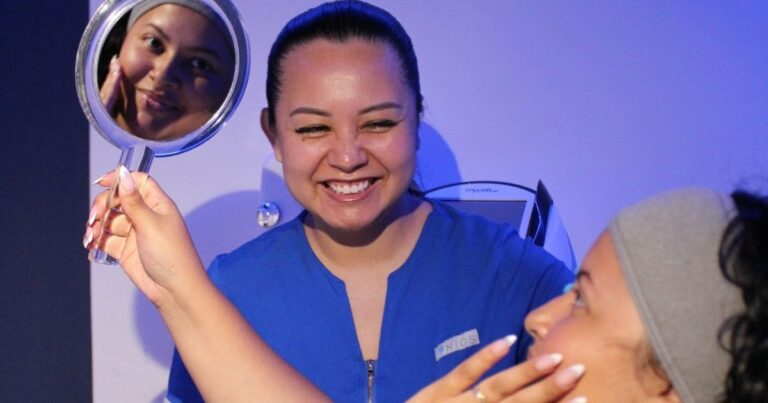
On our new facial menu, launching November 25, microcurrent is part of several facials. In the one built for first visits, we don’t ask you to take our word for anything. We fully work one half of your face first: microcurrent work, a serum step, and a cold finish. Then you sit up, we hand you a mirror, and you compare your own two halves. Only then do we go back and match the other side.
A before-and-after photo asks you to trust the lighting. Your own face, side by side, in your own hands, doesn’t. That mirror moment is the point of the visit. We never skip it.
A few other things you’ll notice in the room:
If microcurrent isn’t the right fit for your face or your week, we’ll say so and point you to something that is.
A few days. That’s the honest range for the lifted look, at the top of the half-a-day-to-a-few-days range Michelle Wong describes above. Results vary by individual.
That makes timing the whole strategy. Got something on Friday? Thursday is your day. A wedding, a presentation, a photo, a first date: book it for the day before.
How often? No number of sessions makes the lift stay, so we won’t build you a plan around one. Some clients save microcurrent for the days that matter. Others make it part of a regular facial, where we keep the notes on your skin from one visit to the next. For the bigger question, here’s our take on whether monthly facials make a difference.
Microcurrent is gentle, but it’s electrical, so we ask everyone at booking. It isn’t for you if you:
Medical News Today’s medically reviewed overview names the same cautions for implanted devices such as pacemakers and for epilepsy, notes that many providers don’t treat during pregnancy, and adds heart conditions. If you have a heart condition, check with your doctor before booking.
On injectables: tell us at booking when you had them, and we’ll tell you how long to wait. If your injector advises waiting longer, their advice wins.
In our facials that use it, the current runs through the main part of the treatment, so it isn’t a step we can simply leave out. If one of these applies to you, we’ll point you to a facial that suits you better.
Same idea, different strength, different hands.
| At-home device | In-studio microcurrent | |
|---|---|---|
| Who runs it | You | A licensed esthetician |
| Strength | Generally a bit gentler than professional devices | A stronger professional device |
| How it’s used | Brands suggest frequent, often near-daily use | Booked around the days that matter, or as part of a facial |
| What comes with it | The device and its gel | A serum step and a cold finish, inside a full facial |
| How you judge the result | Your bathroom mirror | Your own two halves, side by side, in the room |
| Screening | Your device’s manual | We ask at booking |
Michelle Wong notes that at-home devices are a bit weaker than the professional versions, which is why brands recommend using them so often. Research on home devices is thin too: a 2024 review of home beauty devices found relatively few studies on microcurrent, with small samples and short follow-up across the field.
If you love your device, keep using it. A professional session is simply a different thing: trained hands, a stronger device, and a mirror check you don’t have to set up yourself. For more on where at-home care ends, see when at-home skincare isn’t enough.
No. Most people feel a gentle tingle, and some feel very little at all. If anything feels sharp or uncomfortable, tell your esthetician and they’ll adjust.
Come without makeup if you can. If you’re coming straight from work, that’s fine; just expect a little extra time at the start to take it off.
No, whatever the ads call it. A facelift changes the structure of the face. Microcurrent gives you a temporary lifted look, a few days of more defined brow, cheek, and jaw, and nothing more lasting than that.
People with a big day coming up, people curious about microcurrent who want to try it properly, and skeptics who’d rather see a result with their own eyes than read about one. If facials have disappointed you before, the half-face mirror comparison was made for you.
Microcurrent won’t change your face for good. What it can give you is a few days of looking lifted, and a mirror in your own hands to judge it. Our new facial menu opens to everyone on November 25, with microcurrent in several of its facials. Until then, explore our current facials, or book your visit with our licensed estheticians at Columbus Circle. We’ll keep the notes.