Hair Removal for Sensitive Skin: Your Gentlest Options
Hair removal for sensitive skin, method by method: what irritates reactive skin, what's gentler, and…

Most people either skip it or wildly overdo it. Here is the frequency that actually suits your skin, and how to tell when you have gone too far.
Exfoliation is the step people get most wrong in both directions. Some skip it entirely and wonder why their skin looks dull and their serums seem to sit on the surface doing nothing. Others, having read that it works, do it four times a week with a grainy scrub and end up with tight, shiny, angry skin they then treat as sensitive.
The honest answer sits in a fairly narrow band, and it depends less on what you want than on what your skin can tolerate.
One to three times a week suits most people. Two is a sensible default if you have no particular reason to go higher or lower.
That range holds because exfoliation is a controlled removal of the dead cells sitting on your surface. Done at the right interval, it keeps that layer from building up, so skin looks brighter and your other products absorb properly. Done too often, you start removing cells that were still doing their job, which is when the barrier suffers.
Daily exfoliation is almost never a good idea, whatever the packaging suggests.
These work differently enough that lumping them together is where a lot of over-exfoliation starts.
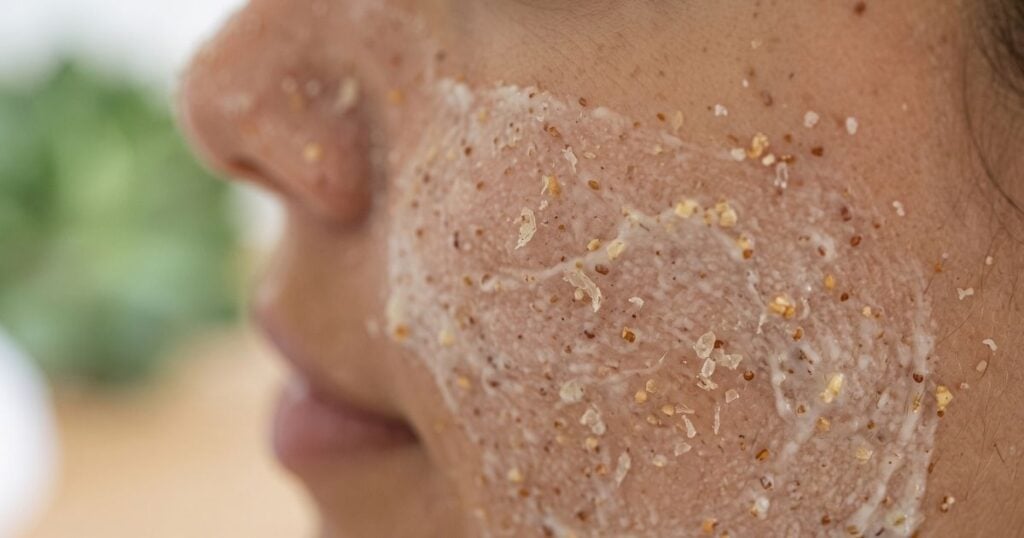
Physical exfoliation removes cells by friction: scrubs, brushes, cloths, sponges. The upside is that it is immediate and you can feel it working. The downside is that it is blunt, and the harsher versions with large or sharp particles can create micro-tears in the surface. If you use a physical exfoliant, gentle pressure and fine texture matter more than the scrubbing action people instinctively apply.
Chemical exfoliation dissolves the bonds holding dead cells to the surface, using acids or enzymes rather than friction. Alpha hydroxy acids such as glycolic and lactic work on the surface and suit dullness and texture. Beta hydroxy acids such as salicylic get into the pore itself, which is why they suit congestion and breakouts. Enzymes are the gentlest of the three and often the right starting point on reactive skin.
Chemical exfoliants tend to be more even and more controllable than scrubs, which is why most estheticians reach for them first. They are also easier to overuse, because you cannot feel the damage accumulating the way you can with friction.
Do not stack them. Using an acid toner and a scrub in the same routine is a common and avoidable mistake. Pick one approach.

Oily or congestion-prone skin. Usually tolerates the upper end, two to three times a week, and often does best with a beta hydroxy acid since it works inside the pore rather than only on the surface.
Dry or dehydrated skin. Lower end, once or twice a week, with a gentler acid such as lactic, which hydrates as it exfoliates. Dry skin needs the dead cells cleared so moisturiser can actually reach living tissue, but it has less margin for error.
Reactive or easily irritated skin. Once a week at most, and enzymes rather than acids or scrubs to begin with. If your skin flushes and stays pink after most products, treat exfoliation as something to introduce slowly rather than a step you owe your routine. Our guide to hair removal for sensitive skin covers the same barrier-first logic applied to a different problem.
Breakout-prone skin. Regular gentle exfoliation helps keep pores clear, but resist the urge to escalate during a flare. Inflamed skin does not want more activity on it. Persistent or painful acne belongs with a dermatologist rather than a stronger exfoliant.
Mature skin. Cell turnover slows with age, so dead cells linger and dullness sets in more readily. Consistent, gentle exfoliation matters more here than intensity.
In winter. Most people need to pull back rather than push harder. Indoor heating, cold air, and hot showers all compromise the barrier, so the same frequency that suited you in July can be too much in January. Watch your skin and adjust rather than holding to a fixed schedule.
This is the part worth knowing, because over-exfoliated skin is frequently mistaken for naturally sensitive skin and treated with yet more product.
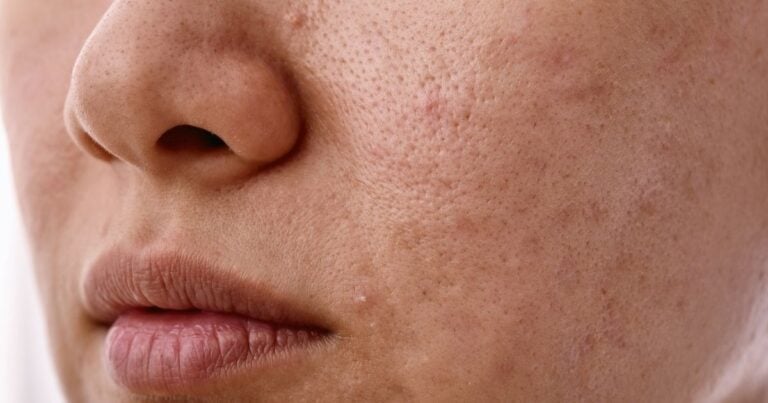
The signs: a tight, taut feeling rather than a smooth one. A shiny or waxy look that is easy to mistake for hydration. Persistent redness. Stinging when you apply things that never used to sting. Unexpected breakouts. Flaking alongside oiliness, which feels contradictory and is a classic barrier signal.
If that sounds familiar, stop all exfoliation for two to three weeks. Cleanse gently, moisturise, wear sunscreen, and add nothing new. Skin repairs itself given the chance, and the fix is genuinely to do less rather than to buy something corrective.

Professional treatments exfoliate more deeply and more evenly than anything you can safely do at home, which changes your at-home maths.
Dermaplaning removes dead surface cells along with fine facial hair in one pass, which is why skin feels so smooth afterward and makeup sits better. A resurfacing chemical peel facial works deeper again, dissolving the bonds between dead cells to trigger renewal, and suits texture, tone and sun damage more directly than home care manages. We compare the two approaches in chemical peel versus facial.
The important practical point: pause your at-home exfoliation around a professional treatment. Stacking a scrub or acid onto freshly exfoliated skin is one of the most common ways people irritate themselves after an otherwise good facial. Your esthetician tells you when to resume.
After cleansing, before serums and moisturiser. Cleanse first so you are working on skin rather than on the day’s residue, then exfoliate, then apply the rest.
Evenings suit it better than mornings, because you have just removed a protective layer and daylight is when that matters. And whatever the hour, sunscreen the following morning is not optional. Freshly exfoliated skin burns more easily, and sun exposure on it is the quickest way to undo the tone improvements you were exfoliating for in the first place.
Is it bad to exfoliate every day?
For almost everyone, yes. Daily exfoliation removes cells that are still doing their job, which compromises the barrier and leads to tightness, redness, stinging, and sometimes breakouts. One to three times a week suits most people, and two is a reasonable default. Some prescription routines run differently under professional guidance, but that is a plan set for you rather than a general rule.
How do I know if I am over-exfoliating?
The tells are a tight or taut feeling instead of smoothness, a shiny waxy look, persistent redness, stinging from products that never used to sting, and flaking that appears alongside oiliness. If you recognise those, stop exfoliating for two to three weeks and keep to gentle cleansing, moisturiser, and sunscreen. Skin rebuilds on its own once you stop interfering.
Which is better, a scrub or an acid?
Chemical exfoliation is generally more even and more controllable, which is why estheticians tend to prefer it, though a gentle physical exfoliant used lightly is perfectly reasonable. What matters more is not using both. If you are choosing an acid, lactic suits dry skin, salicylic suits congestion, and enzymes are the gentlest place to start on reactive skin.
Should I exfoliate before or after cleansing?
After. Cleanse to remove makeup, sunscreen, and the day’s build-up, then exfoliate on clean skin, then apply serums and moisturiser. Exfoliating over an unwashed surface mostly redistributes what is already there.
Can I exfoliate after a facial or a peel?
Not straight away. Professional treatments have already exfoliated your skin, often considerably more deeply than home products manage, so adding a scrub or acid on top is a reliable route to irritation. Wait until your esthetician confirms your skin has settled, then reintroduce one product at a time.
Exfoliation rewards restraint. Two gentle sessions a week, adjusted down when your skin protests or the weather turns, does more for texture than an aggressive routine you have to recover from.
If you would rather have it handled properly, book a facial at Nios Skin Lab in Manhattan, Brooklyn, or Queens, and your esthetician assesses what your skin can take before touching it.