5 Possible Electrolysis Hair Removal Side Effects
The Good, The Smooth, and the (Tiny) Bumps Along the Way
Hair removal for sensitive skin, method by method: what irritates reactive skin, what's gentler, and when electrolysis makes sense. Book a consultation.
The gentlest hair removal for sensitive skin is whatever touches your skin least. Trimming disturbs the surface least, careful shaving comes next, and threading is a low-irritation choice for small areas. Waxing, epilating, and depilatory creams are the likeliest to sting. To stop repeating it, electrolysis works one follicle at a time. Treated follicles don’t grow back. New hair can still appear with age or hormonal changes.
Our guides to a damaged skin barrier and how often to exfoliate make the same point: reactive skin does better with less. Hair removal runs on the same rule.
“Sensitive skin” usually means skin that stings, burns, itches, or tingles in response to things that shouldn’t bother it—a new cleanser, cold wind, a razor—often with nothing visible to show for it. Researchers still debate exactly what causes it, but it’s common: in one UK survey, about half of women described their skin as sensitive (Duarte et al., Anais Brasileiros de Dermatologia).
Some skin that feels sensitive is something else: eczema, rosacea, psoriasis, an allergy, or a barrier worn down by too much exfoliating. The same review notes that conditions like atopic dermatitis and rosacea can sit alongside sensitive skin and weaken the barrier. If you have a diagnosed skin condition, a rash that keeps coming back, or skin that cracks or weeps, see a dermatologist before starting any hair removal on that area.
We don’t diagnose skin conditions. Our part is the hair, on skin that’s ready for it.
Most methods work on your skin as well as your hair: wax grips it, razors scrape it, epilators pull at it, and depilatory creams put chemicals on it. On reactive skin the trouble is rarely one shave or one wax. It’s the repeat: skin that gets irritated every few weeks never gets much of a break.
Some of what looks like irritation isn’t. Bumps after every shave may be hairs curling back into the skin. The American Academy of Dermatology says razor bumps start when shaving irritates the skin, and its first suggestion is to stop shaving if you can (AAD). Our guide to getting rid of an ingrown hair covers that fix.
Roughly from the least skin contact to the most, then laser (as a comparison) and electrolysis. Trimming and epilating are in the table. (For cost and how long each lasts, see hair removal methods compared.)
Shaving. Gentle when done well. The AAD suggests shaving at the end of a shower, using a moisturizing shaving cream, going with the direction of growth, and replacing a disposable razor after five to seven shaves (AAD).
Threading. A twisted cotton thread lifts hairs out in rows, with no product and no heat. The AAD calls it an option for sensitive or acne-prone skin (AAD), though it only suits small areas like the brows and upper lip.
Sugaring. Sugar paste pulls hair from the root, like wax. It’s often called kinder, but we haven’t seen good head-to-head evidence: think of it as a softer version of the same trade.
Waxing. Wax takes hold of skin as well as hair. The AAD lists redness, irritation, and burns from wax that’s too hot, and advises against waxing if you’ve taken isotretinoin in the past six months or use tretinoin or an antibiotic, because thinned skin can tear. On a prescription retinoid? Ask your prescriber first.
Depilatory creams. The AAD says they can irritate, sometimes only after months or years of trouble-free use. Patch test first: a small amount for the time on the label (rinse at the first sting), then wait 24 hours before using it on the full area.
Laser hair reduction (a comparison; we don’t offer it). Laser relies on pigment, so it is less effective on blonde, gray, red, and white hair. It reduces hair: fewer hairs regrow, not every hair is gone. The AAD notes that in inexperienced hands it can cause burns, blisters, or dark spots, and that your provider should have experience with your skin tone.
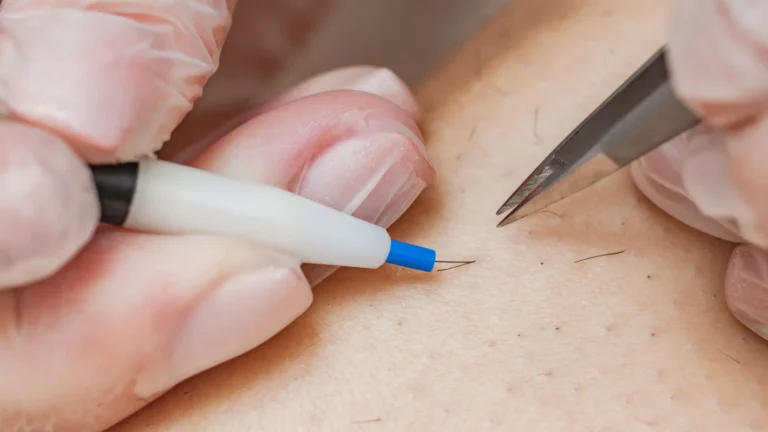
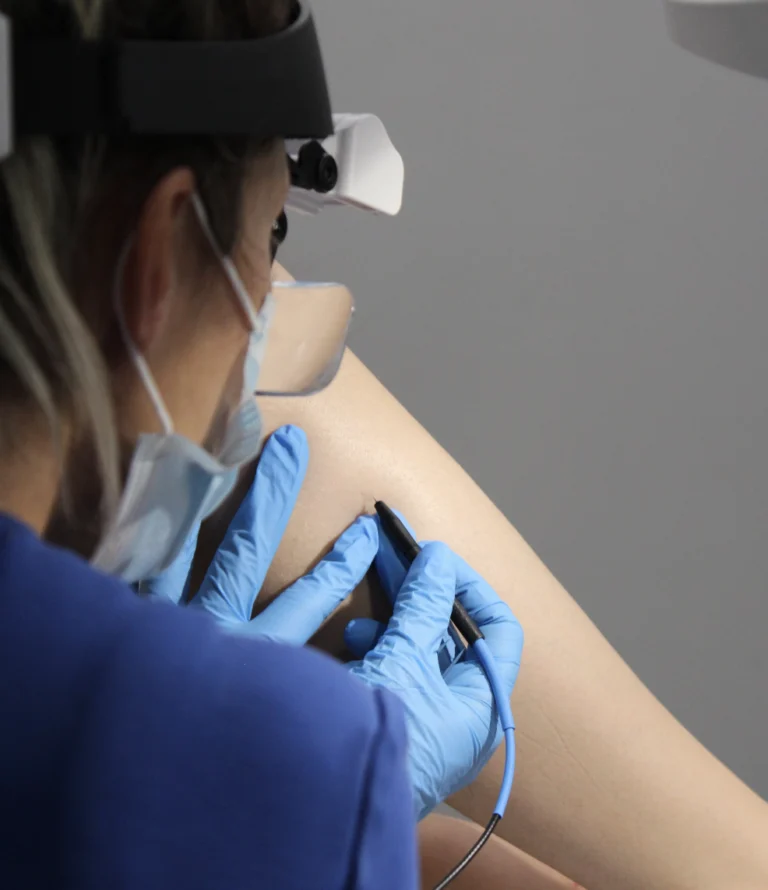
Electrolysis. A fine probe slides into the natural opening of one follicle and delivers a small current to the base (HealthLinkBC). Nothing coats, grips, or scrapes the skin between follicles, and it works on all hair colors and skin tones.
| Method | What touches your skin | Watch-outs for sensitive skin | What happens to the hair |
|---|---|---|---|
| Trimming | A blade above the surface | Very few; stubble stays visible | Cut above the skin |
| Shaving | A razor across the surface | Razor burn, nicks, bumps as hair regrows | Cut at the surface |
| Threading | A thread at the surface | Small areas only; ingrown hairs if done poorly | Pulled from the root |
| Sugaring | A paste that grips hair | Redness; still pulls on skin | Pulled from the root |
| Waxing | Wax that grips skin and hair | Redness, burns, tearing on retinoid-thinned skin | Pulled from the root |
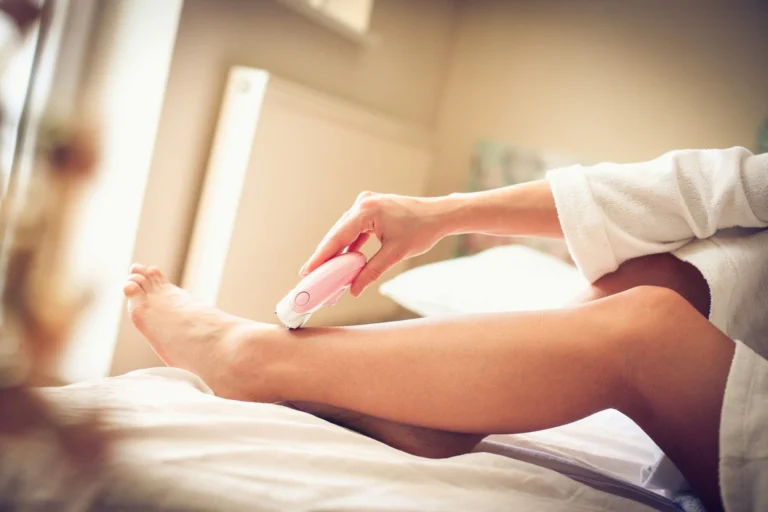
| Epilating | A device that plucks | Tenderness, redness, ingrown hairs (Healthline) | Pulled from the root |
| Depilatory creams | Chemicals on the surface | Stinging and burning; patch test first | Dissolved at the surface |
| Laser hair reduction | Light absorbed by pigment | Burns or dark spots in inexperienced hands; less effective on light hair | Reduced, not removed |
| Electrolysis | A fine probe in each follicle | A pricking sensation; temporary redness; scarring in inexperienced hands | Treated follicles don’t grow back |
Often, yes, with honest caveats.
It answers the repetition problem. Electrolysis is permanent hair removal: it destroys each treated follicle’s growth center, so those hairs don’t grow back.
If shaving bumps brought you here: a treated follicle grows no hair to curl back in. More on ingrown hairs and razor bumps.
The caveats. Treated follicles don’t grow back. New hair can still appear with age or hormonal changes. And you will feel it; our electrolysis pain guide covers the sensation.
Afterward, treated skin can look red, feel tender, or swell a little, and that’s temporary. In some people it can scar or change skin color (HealthLinkBC). The AAD adds that poor technique can burn and that people with darker skin tones can develop keloids (AAD). If you’ve ever had a keloid, tell your electrologist and check with your dermatologist first.
Before your appointment. Don’t wax, pluck, or tweeze, and skip shaving and depilatory creams for at least four days. Your electrologist needs hair above the surface to find each follicle. For reactive skin, those days double as a short break from the razor.
At your consultation. Tell us what has made your skin react before, whether you use retinoids or prescription creams, and about any diagnosed condition. Your electrologist adjusts to your skin, with gentler energy settings or a smaller area at a time where it needs it. Your electrologist will build a schedule with you at your consultation.
If you want numbing cream. Nios Skin Lab sells numbing cream; clients apply it themselves before the appointment. If your skin reacts easily, say so when you pick it up, and follow the directions that come with it.
Ask your dermatologist first: whether to work on an affected area is a medical question, not a cosmetic one. Bring their advice and a list of your skin products to your consultation.
Sensation varies from person to person and area to area. Expect a small pricking sensation, similar to or slightly more than plucking. For high-sensitivity areas like the upper lip, numbing cream is an option you apply yourself before you arrive.
For day-to-day upkeep, trimming and threading cause the least irritation. For hairs you’d rather stop dealing with, such as on the upper lip or chin, electrolysis works on each follicle individually.
Start with less. Trim or shave carefully while your barrier settles, test any new product on a small patch, and drop the methods that leave you pink for days. If you’re tired of asking your skin to recover from the same thing every month, electrolysis is the option on this list built to end the repeat, one follicle at a time.
Tell us what your skin has been through, and we’ll start from there. Book a consultation at our Astoria studio, ground floor with zero steps on Steinway Street, or at any Nios Skin Lab location.