After Summer Skincare: How to Reset Your Skin
What Summer Leaves Behind, and How to Reset It
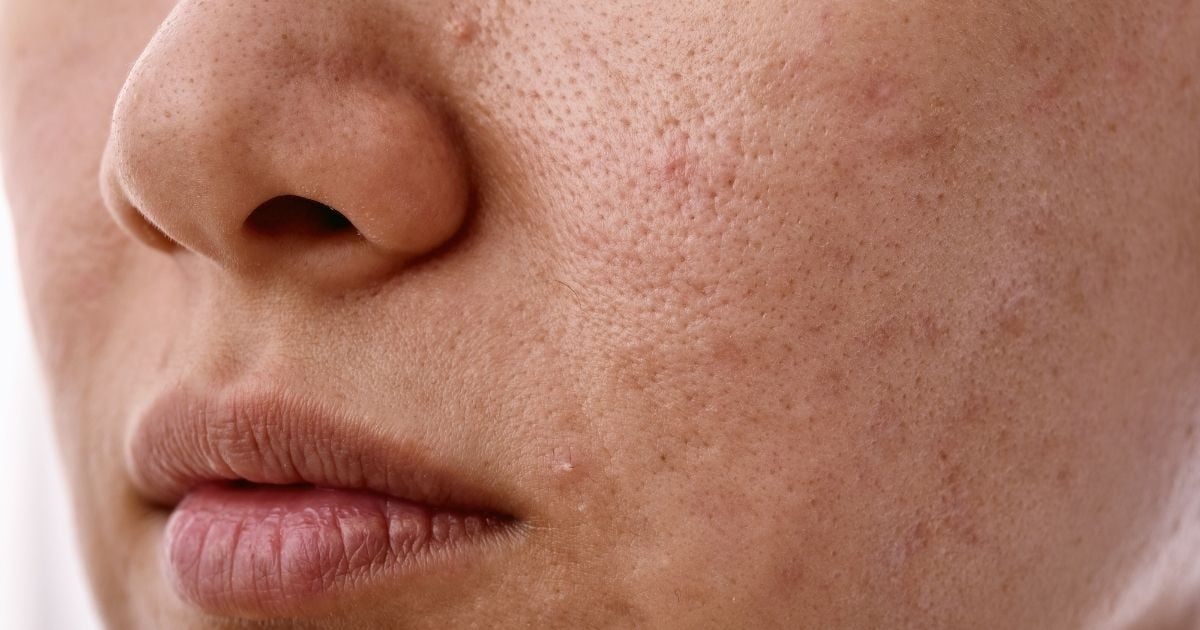
Tight, stinging, flaking, breaking out, and nothing works. That is usually a barrier problem, and the fix is to do less rather than buy more.
There is a particular kind of skin trouble that does not respond to any of the usual answers. Your face feels tight rather than smooth. Products you have used for years suddenly sting. You are flaking and oily at the same time, which makes no sense. You have breakouts and dryness together. And every new thing you try to fix it seems to make it slightly worse.
That combination is almost always one problem: a damaged skin barrier. It is extremely common, it is usually self-inflicted through good intentions, and the fix runs against every instinct you have, because it involves doing dramatically less rather than finding the right product.
Your barrier is the outermost layer of your skin, the stratum corneum. The standard description is a brick wall: flattened skin cells as the bricks, and a mortar of lipids including ceramides, cholesterol, and fatty acids holding them together.
It does two jobs in opposite directions. It keeps water in, and it keeps irritants, allergens, and bacteria out. When the mortar is depleted, both jobs fail at once. Water escapes faster than you can replace it, which is why you feel perpetually dry regardless of how much moisturiser you apply, and irritants get in more easily, which is why things that never bothered you suddenly do.
That is the whole mechanism, and once you see it, every symptom below makes sense.
Tightness rather than smoothness. Healthy hydrated skin feels supple. Barrier-damaged skin feels taut, especially after cleansing.
Stinging from products you used to tolerate. The clearest signal. If your usual serum now burns for thirty seconds, that is not the serum changing.
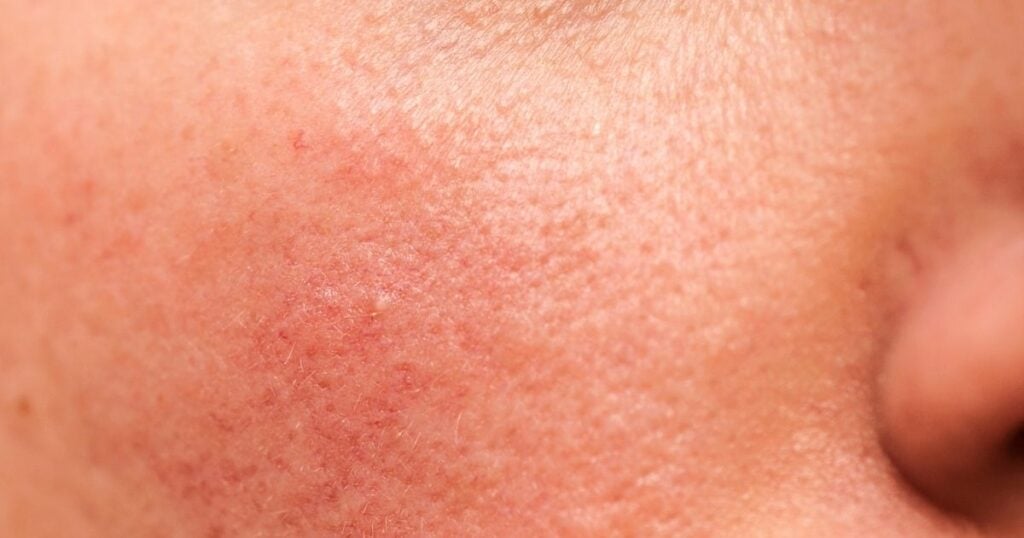
Redness that lingers. Not a flush that settles, but a persistent pink you cannot trace to anything specific.
Flaking alongside oiliness. The contradiction that confuses people most. Dehydrated skin often overproduces oil to compensate, so you can be greasy and flaking simultaneously.
A shiny, waxy, or slightly transparent look. Frequently mistaken for hydration or a healthy finish. It is over-exfoliated skin reflecting light differently.
New breakouts, often small and uniform. When the barrier lets bacteria in more easily, congestion follows.
Rough or bumpy texture that appears despite, or because of, more exfoliating.
Everything you try makes it slightly worse. The most reliable tell of all.
Almost all of this is well-intentioned.
Over-exfoliation. The leading cause by a distance. Daily acid toners, scrubs several times a week, or stacking a chemical exfoliant and a physical one in the same routine. Our guide to how often you should exfoliate covers the sensible frequency.
Stacking actives. Retinoid, vitamin C, an acid, and a strong cleanser, all in the same week, because each is individually good for your skin. Individually true, collectively too much.
Hot water. Long hot showers and hot-water face washing strip lipids directly. This one is badly underrated.
Harsh cleansers. Anything that leaves your face feeling squeaky. Squeaky is not clean, it is stripped.
Over-washing. Twice a day is plenty for most people, and once plus a rinse suits many.
Depilatory creams and waxing. Both act on the skin surface as well as the hair. Repeated on the same area, they keep a barrier from ever fully recovering, which is a large part of why some people find every hair removal method irritating. We cover that specifically in hair removal for sensitive skin.
Weather and indoor heating. Cold dry air outside and forced-air heat inside both pull water out. Our dry skin routine covers the seasonal version of this.
Age and hormonal change. Barrier function declines over time, and falling estrogen reduces the skin’s ability to hold water, which is why this problem often arrives alongside other menopause skin changes.

The protocol is short and the hard part is compliance, because it asks you to stop doing things rather than start.
Stop all exfoliation. Completely. No acids, no scrubs, no cleansing brushes, no enzyme masks. Not reduced, stopped.
Pause every active. Retinoids, vitamin C, benzoyl peroxide, anything labelled as treatment. If a prescription is involved, ask the prescriber rather than stopping on your own.
Strip the routine to three steps. A gentle non-foaming cleanser, a barrier-supporting moisturiser, and sunscreen in the morning. That is the entire routine for the next few weeks.
Choose repair ingredients. Ceramides, cholesterol, and fatty acids replace what the mortar is missing. Glycerin and hyaluronic acid draw water in. Niacinamide at modest strength supports barrier function. Squalane and petrolatum seal it in. Nothing exotic and nothing expensive is required.
Apply to damp skin. Within a minute of cleansing, so you are trapping water rather than trying to add it.
Lukewarm water only. Shorter showers, cooler than feels good.
Keep wearing sunscreen. A compromised barrier is more vulnerable to UV, not less.
Add nothing new. This is the rule people break. Introducing a promising new product mid-repair makes it impossible to tell what is helping.
Then wait. This is the part nobody wants.
Expect two to four weeks for meaningful repair, and longer if the damage has built up over months. You should feel some improvement in the first week, less tightness and less stinging, but the structural rebuild takes the full stretch.
The most common failure is impatience. Skin feels better after eight days, so the retinoid comes back out, and the cycle restarts. When you do reintroduce actives, add one product, at low strength, twice a week, and hold it there for a fortnight before adding anything else.
If your skin is not improving at all after four weeks of a genuinely stripped-back routine, that is worth a professional opinion rather than more experimentation.
Ordinary barrier damage responds to the reset above. Some things do not, and are a doctor’s territory rather than a skincare adjustment: skin that is cracked, weeping, bleeding, or intensely itchy, well-defined patches that keep returning to the same place, or anything spreading. Eczema, seborrhoeic dermatitis, rosacea, and contact allergy all produce overlapping symptoms and all need proper diagnosis. If you have a diagnosed condition, your dermatologist’s plan takes precedence over any general routine, this one included.
Worth being straight about this, because it is where a lot of studios oversell.
While your barrier is actively compromised, most treatments should wait. A resurfacing peel on a barrier that is already struggling is the wrong direction, and any esthetician worth booking tells you so and adjusts the plan. At Nios the approach on reactive skin is to strengthen first and modulate friction and actives rather than push through, which sometimes means the honest answer at a consultation is to calm things down before treating.
What does help is hydration without abrasion. Our Aqua facial uses hydrodermabrasion, water-based exfoliation paired with serum infusion, which is far gentler than anything abrasive and puts hydration back while it clears the surface. For a barrier in recovery it is usually the appropriate first treatment.
Once repaired, professional treatment helps keep it that way, because a consistent professional rhythm tends to reduce the temptation to over-treat at home. Our facials are assessed each visit rather than run to a fixed recipe, which matters when your skin’s tolerance is changing week to week.
How do I know if my skin barrier is damaged?
The reliable signals are tightness rather than suppleness, stinging from products you previously tolerated, lingering redness, flaking alongside oiliness, a shiny or waxy look, and new small breakouts. The clearest tell is that everything you try to fix it makes it marginally worse. If you recognise three or more of those, treat it as a barrier problem and strip your routine back rather than adding a corrective product.
How long does it take to repair a skin barrier?
Usually two to four weeks of a genuinely simplified routine, longer if the damage accumulated over months. You should notice less tightness and less stinging within the first week, but the structural repair needs the full period. The most common mistake is reintroducing actives as soon as it feels better, which restarts the cycle. If four weeks of stripped-back care produces no improvement, get a professional opinion.
Can I use retinol on a damaged skin barrier?
Pause it while you repair. Retinoids increase cell turnover, which is useful on healthy skin and counterproductive on a barrier that cannot keep up. Reintroduce only once the tightness and stinging have gone, at a lower strength, two nights a week, buffered with moisturiser. If a dermatologist prescribed it, ask them before stopping rather than deciding alone.
Is a damaged skin barrier the same as sensitive skin?
They present almost identically, which is why so many people conclude they have simply become sensitive. The difference matters: a damaged barrier is a temporary condition you can repair, whereas genuine sensitivity is a longer-term characteristic. Plenty of people who describe themselves as sensitive are actually over-exfoliated, and their skin becomes noticeably more tolerant after a few weeks of barrier repair.
Should I get a facial if my barrier is damaged?
Not a resurfacing or exfoliating one, no. Adding exfoliation to a compromised barrier works against you. A hydrating treatment such as hydrodermabrasion can genuinely help, since it delivers moisture without abrasion. Tell your esthetician what your skin has been doing, and expect a good one to adjust or postpone rather than proceed as booked.
Barrier repair is the rare skin problem where the correct response is subtraction. Three products, lukewarm water, hands off, and a month of patience resolve most of it, and no serum shortcut exists.
If you are not sure whether you are dealing with barrier damage or something else, book a consultation at Nios Skin Lab in Manhattan, Brooklyn, or Queens. Your esthetician looks at what your skin is doing and tells you honestly whether treatment or a few weeks of leaving it alone is the better answer.