How to Remove Upper Lip Hair
Threading, waxing, shaving, laser, electrolysis. What each one actually does to upper lip hair, and…
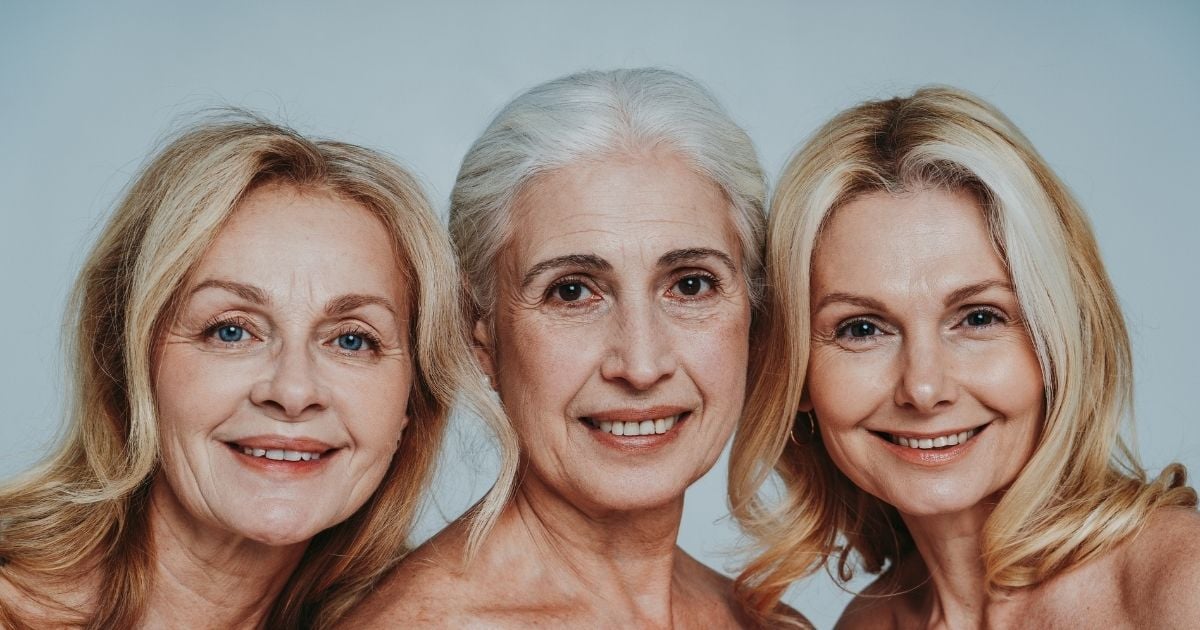
Dryness, thinning, lost firmness, sometimes breakouts. The hormonal mechanism behind each change, and what actually helps.
Most conversations about menopause cover hot flushes, sleep, and mood. Skin gets mentioned in passing, if at all, which leaves a lot of people quietly puzzled when the face they have managed comfortably for decades stops responding to anything they know how to do.
Moisturiser that worked for years suddenly feels like it evaporates. Skin looks thinner across the cheeks. Makeup settles into lines that were not there eighteen months ago. Some people get adult breakouts for the first time since their twenties, which feels like an unfair addition.
None of that is imagined, and none of it is a personal failing. It is a hormonal shift with fairly specific effects on skin structure, and understanding which change comes from what makes it far easier to address.
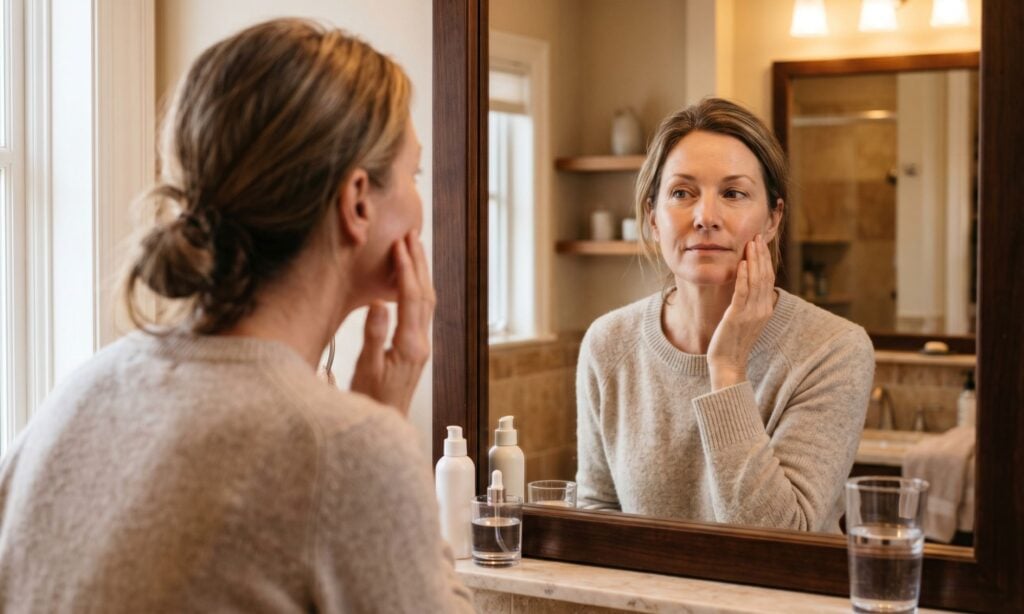
Dryness, and a different kind of dryness. Not just tightness after cleansing, but a persistent lack of moisture that ordinary lotion no longer resolves. Skin can start to feel almost papery.
Thinning. The skin across the face, and often the backs of the hands, becomes measurably thinner and less resilient. Fine surface lines become more visible as a result, even where deeper wrinkles have not changed much.
Loss of firmness. Elasticity drops, so skin recovers more slowly when moved and the jaw and cheek contours soften.
Rougher texture. Cell turnover slows, so dead cells linger longer and the surface feels less smooth and looks duller.
New sensitivity. A thinner barrier reacts to products that were previously unremarkable. People often conclude they have “become sensitive”, which is accurate but is a consequence rather than a cause.
Breakouts, for some. Counterintuitive alongside dryness, and it happens because the balance between hormones shifts rather than everything simply declining. Dry and spotty at the same time is a genuine combination.
This is where it becomes clearer, because each of the three hormones in decline does something specific to skin.
Estrogen supports the extracellular matrix, collagen production, and blood supply to the dermis. Its decline is the main driver behind lost firmness, thinning, and the slowdown in collagen.
Progesterone contributes to extracellular matrix formation, dermal blood supply, and the skin’s ability to retain water. Less of it means less water held in the dermis, which is part of why the dryness feels structural rather than surface-level.
Testosterone, which also declines, affects blood supply to the skin and sebum production. Reduced sebum means less of your own oil, which is a direct contributor to dryness.
Those three together explain most of what people notice. The perimenopausal years, rather than menopause itself, are usually when the changes begin, which catches people out because they are not yet expecting them.
The routine that served you at thirty-five is probably not the routine you need now, and the adjustments are less about buying more than about changing emphasis.
Move from lightweight to genuinely richer products. Cream rather than lotion or gel. Your skin is producing less of its own oil, so more of it has to come from outside.
Humectants underneath, occlusives on top. Glycerin and hyaluronic acid draw water in, richer creams and balms stop it leaving. Apply to damp skin rather than dry, which matters more now than it used to. Our dry skin routine covers the layering in more detail, and the same logic applies year round here rather than just in winter.
Treat the barrier as the priority. Ceramides, fatty acids, and gentle formulas do more than any single active while your skin is thinner and more reactive. If everything stings, the barrier is the thing to fix first.
Retinoids remain useful, but the approach changes. They support cell turnover and collagen, and they are also more likely to irritate thinner skin. Lower strength, less often, buffered with moisturiser, and introduced slowly rather than nightly from the start.
Sunscreen, without negotiation. UV degrades collagen, and you have less margin than you did. This is the highest-value habit on the list by a wide distance.
Ease off exfoliation. Slower turnover tempts people to scrub more. Thinner skin tolerates it less well. Gentler and less often, as covered in how often you should exfoliate.
Professional treatment does the things home care cannot, and the useful ones here are the ones addressing absorption and hydration rather than aggressive resurfacing.
Our anti-aging facial uses electroporation, controlled electrical pulses that temporarily increase the skin’s permeability so peptides, hyaluronic acid, and antioxidants reach past the barrier instead of sitting on top of it. That matters more on menopausal skin than on younger skin, because a thinner, drier barrier absorbs less well from topical products alone, and because the actives that support collagen and hydration are precisely the ones you want getting further in.
For dryness specifically, the Aqua facial uses hydrodermabrasion to combine water-based exfoliation with serum infusion, which suits skin that needs the dull surface cleared without anything abrasive.
Resurfacing peels still have a place for texture and tone, though depth needs more care than it once did. Thinner, more reactive skin has less margin, which is exactly why depth is assessed rather than selected from a list.
Realistic framing matters here. None of this reverses the hormonal shift, and anyone claiming otherwise is selling something. What consistent professional treatment does is support hydration, absorption, and barrier function, which is what visibly improves how skin looks and feels.
The same hormonal shift that thins facial skin often produces coarse hair where you did not previously have it, most commonly on the chin, upper lip, and jaw. That is not a coincidence: as estrogen falls, the relative influence of androgens rises, and follicles that were producing fine vellus hair start producing terminal hair instead.
It is a separate problem with a separate solution, and we cover it properly in menopause facial hair removal. The short version is that electrolysis permanently closes the follicles it treats regardless of the hormonal driver behind them, which is why it suits hormonal hair better than pigment-dependent methods.
Hormone therapy exists and some people find it changes their skin alongside other symptoms. Whether it is appropriate for you is a medical decision involving your history and your risks, and it belongs with your physician rather than with an esthetician or an article. We mention it because people ask, not to recommend it.
Separately, see a doctor about skin changes that are not simply dryness and thinning: patches that are inflamed, cracked, weeping, or persistently itchy, anything changing shape or colour, or sudden changes that seem out of step with the gradual pattern above. Menopause explains a lot but it should not become the default explanation for everything.
Why is my skin suddenly so dry during menopause?
Because two things happen at once. Falling progesterone reduces the skin’s ability to retain water in the dermis, and falling testosterone reduces sebum production, so you have less of your own oil on the surface. The result is dryness that feels structural rather than superficial, which is why a light moisturiser that worked previously no longer does. Richer creams, humectants applied to damp skin, and barrier-supporting ingredients address it far better than simply applying more of the same product.
Does menopause cause wrinkles?
It contributes to the conditions behind them. Declining estrogen slows collagen production and reduces skin thickness and elasticity, so existing fine lines become more visible and skin recovers more slowly. Sun exposure over your lifetime remains the larger factor in visible ageing, which is why sunscreen stays the single most useful habit rather than any corrective product.
Can I still use retinol on menopausal skin?
Usually yes, with adjustments. Retinoids support cell turnover and collagen, which is helpful, but thinner and more reactive skin irritates more easily. Start at a lower strength, use it two or three nights a week rather than nightly, apply moisturiser underneath or over the top to buffer it, and build up slowly. If your skin is currently stinging at everything, repair the barrier first and reintroduce actives afterward.
Why am I getting breakouts and dryness at the same time?
Because menopause shifts the balance between hormones rather than reducing all of them evenly. As estrogen falls, the relative influence of androgens increases, which can stimulate breakouts, while lower sebum and reduced water retention cause dryness in parallel. Treating only the breakouts with stripping products usually makes the dryness worse and the breakouts no better. Gentle and hydrating, alongside targeted treatment, works better than aggressive.
Are facials worth it for menopausal skin?
They address what home care structurally cannot, particularly absorption. A thinner, drier barrier takes up less from topical products, so treatments that improve how deeply actives penetrate, such as electroporation, have more to offer than they would on younger skin. Results come from consistency rather than any single appointment, and honest expectations matter: professional treatment supports hydration, barrier function, and texture. It does not undo a hormonal shift.
Menopausal skin is not broken and it does not need punishing. It needs richer support, gentler handling, and consistency, which is a different approach rather than a harder one.
Book a facial at Nios Skin Lab in Manhattan, Brooklyn, or Queens, and your esthetician assesses where your skin actually is before recommending anything.