Hair Removal for Sensitive Skin: Your Gentlest Options
Hair removal for sensitive skin, method by method: what irritates reactive skin, what's gentler, and…
The days after a peel decide your result. Here is the practical aftercare, plus how to prep so your skin is ready.
A peel does most of its work in the days after you leave, not during the appointment. That is the part people underestimate. Your skin spends the following week shedding its old surface and building a new one, and what you do during that window decides whether you end up with the smooth result you paid for or an irritated patch you have to wait out.
None of it is complicated. It is mostly a short list of things to leave alone.
If you read nothing else:
Do
Do not

Aftercare starts before the appointment, because a compromised barrier reacts to a peel very differently from a healthy one.
Pause your actives. Retinoids, strong acids, and prescription exfoliants all thin the surface layer, which changes how deeply a peel penetrates. Your esthetician tells you exactly how long to pause based on the peel and on what you use, so ask when you book rather than guessing.
Do not exfoliate in the days beforehand. No scrubs, no acid toners, no cleansing brushes. You want your barrier intact, not pre-stripped.
No waxing, threading, or other hair removal on the area. These all do surface work of their own, and stacking them with a peel is asking for irritation.
Arrive with clean skin and no makeup. It saves treatment time, and our FAQ covers the practical logistics.
Say something if anything has changed. New medication, a cold sore, recent sun exposure, a course of treatment elsewhere. Any of these can change whether a peel is appropriate that day, and your esthetician would much rather reschedule than proceed on skin that is not ready.
Our peels sit at the gentler end of the scale, so most clients return to work and normal life the same day. What you can reasonably expect:
Immediately. Some tightness, warmth, or mild pink. This settles over the first few hours.
Day one to two. Skin often feels tight and looks slightly more matte than usual. Some clients notice nothing more than this.
Day two to four. This is when light flaking may appear, typically around the nose, mouth, and the flat of the cheeks. It is usually fine and dusty rather than dramatic sheeting. Deeper peels shed more, which is one of several reasons depth is matched to your skin rather than chosen from a menu.
Day four onward. The flaking finishes and the new surface is visible. This is the point people book peels for.
Deeper professional peels involve more visible shedding and a longer recovery. If you have seen alarming photographs online, they are almost always from a considerably stronger peel than a resurfacing facial.
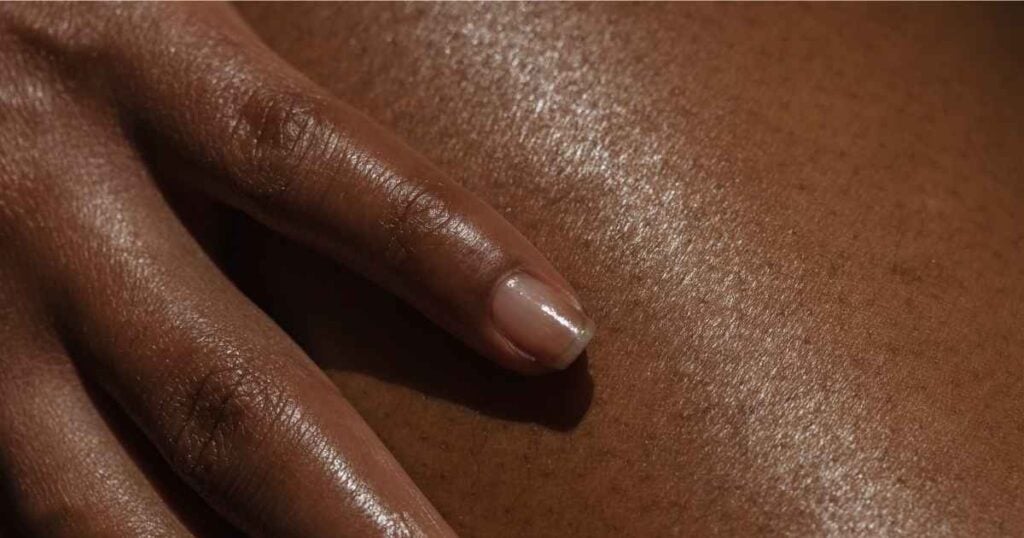
Wear sunscreen, without exception. Freshly resurfaced skin has less protection than usual and burns more easily, and sun exposure on new skin is the most reliable way to provoke pigmentation. Broad spectrum, applied every morning, reapplied if you are outdoors. This is the single most important item on the list and the one people skip.
Do not pick, peel, or pull the flaking. If skin is lifting, leave it. Pulling it away removes it before the new layer underneath is ready, which is how people end up with raw patches, prolonged redness, and occasionally a mark that outlasts everything the peel achieved. Let it shed on its own schedule.
Keep it simple and hydrated. A gentle non-foaming cleanser and a plain moisturizer for several days. This is not the week to introduce anything new.
Hold off on your actives. Retinoids, acids, vitamin C, and scrubs all wait until your esthetician says otherwise. Reintroducing an active too early is one of the most common aftercare mistakes, second only to skipping sunscreen.
Skip heat, sweat, and chlorine for a day or two. Sauna, steam room, hot yoga, very hot showers, hard workouts, and chlorinated pools all irritate skin that is still settling. Our FAQ gives the same guidance for other treatments.
No other exfoliation. No dermaplaning, no scrubs, no facials, no waxing on the area until the shed has finished and your practitioner confirms you are clear.
Go without makeup for the first day if you can, and go easy when you resume. Clean brushes.
Most peel reactions are the ordinary tightness and flaking described above. Get in touch with your esthetician or a doctor if you notice any of these instead:
None of these are expected from a resurfacing facial, and flagging them early is the right move.
A single peel improves texture and tone. Keeping that improvement is a matter of habit rather than more treatments: daily sunscreen, gentle consistent care, and a sensible interval between peels rather than stacking them. Your skin keeps turning over after the peel, so a new surface gradually replaces the treated one. That is why results are maintained through a rhythm rather than a one-off.
Our resurfacing facial pairs the peel with calming steps in the same session precisely so you leave looking fresh rather than raw, and your esthetician sets your interval based on your skin instead of a fixed schedule.
If you are weighing a peel against a gentler option for next time, our comparison of chemical peels and facials covers that choice.
How long does it take to recover from a chemical peel?
For a light resurfacing peel, most clients are comfortable the same day, with any tightness or pink settling within a few hours. Light flaking, if it happens at all, usually runs from around day two to day four and finishes by the end of the first week. Deeper peels take longer and shed more visibly. Your esthetician tells you what to expect for the specific peel used on your skin.
Can I wash my face and wear makeup after a chemical peel?
Wash, yes, straight away. Use a gentle non-foaming cleanser and lukewarm water, and pat rather than rub. Avoid cleansing brushes, washcloths, scrubs, and anything with acids or exfoliating particles until the shed has finished. Makeup is best skipped for the first day if you can manage it, and kept light with clean brushes when you resume. Keeping the whole routine boring for several days is the strategy.
What happens if I pick the peeling skin?
You remove the old surface before the new layer underneath is ready, which risks raw patches, extended redness, and post-inflammatory marks that can take far longer to fade than the flaking would have taken to finish. It is the fastest way to turn a good result into a problem. If skin is lifting and it bothers you, moisturize it and leave it alone.
Do I really need sunscreen after a peel?
Yes, and this is the one to take seriously. Newly resurfaced skin has less protection than usual, and sun exposure at that point is the most common cause of pigmentation after a peel. Broad spectrum every morning, reapplied outdoors, for at least the following weeks. Skipping it undoes the treatment you just paid for.
When can I start using retinol again?
Ask your esthetician, because it depends on the peel depth and on what you use. Reintroducing retinoids or acids too early is one of the most common aftercare mistakes, and it usually shows up as irritation people mistakenly blame on the peel itself. Wait for the shed to finish completely, then reintroduce one product at a time rather than restarting a full routine at once.
Peel aftercare is almost entirely a discipline of restraint. Sunscreen every morning, hands off the flaking, nothing active for a few days, and your skin does the rest on its own schedule.
Book a resurfacing facial at Nios Skin Lab in Manhattan, Brooklyn, or Queens, and your esthetician sends you home knowing exactly what your skin needs that week.