How to Remove Chin Hair Permanently
Why the tweezers never win—and the one method that actually ends the cycle.
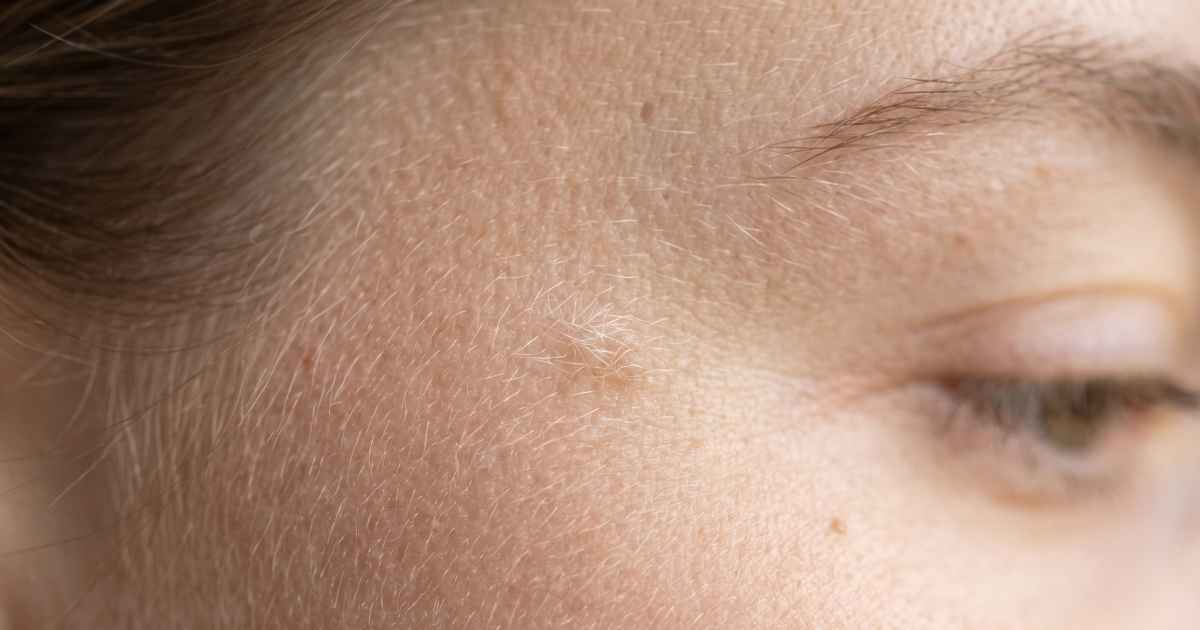
You notice it in certain light: a soft, pale halo of fine hair along your jaw, cheeks, or upper lip that catches every ray of afternoon sun and shows up in every front-facing photo. Peach fuzz. Almost everyone has it, most people never think about it, and some people find it quietly maddening. If you […]
You notice it in certain light: a soft, pale halo of fine hair along your jaw, cheeks, or upper lip that catches every ray of afternoon sun and shows up in every front-facing photo. Peach fuzz. Almost everyone has it, most people never think about it, and some people find it quietly maddening. If you are in that last group, here is the honest guide: what peach fuzz is, which removal methods actually work, which one is permanent, and why the treatment most people assume would fix it cannot touch it at all.
Peach fuzz is the everyday name for vellus hair, the fine, soft, usually light-colored hair that covers most of your face and body. It is short, thin, and typically unpigmented or very lightly pigmented, which is why it shows up more in bright or angled light than straight on.
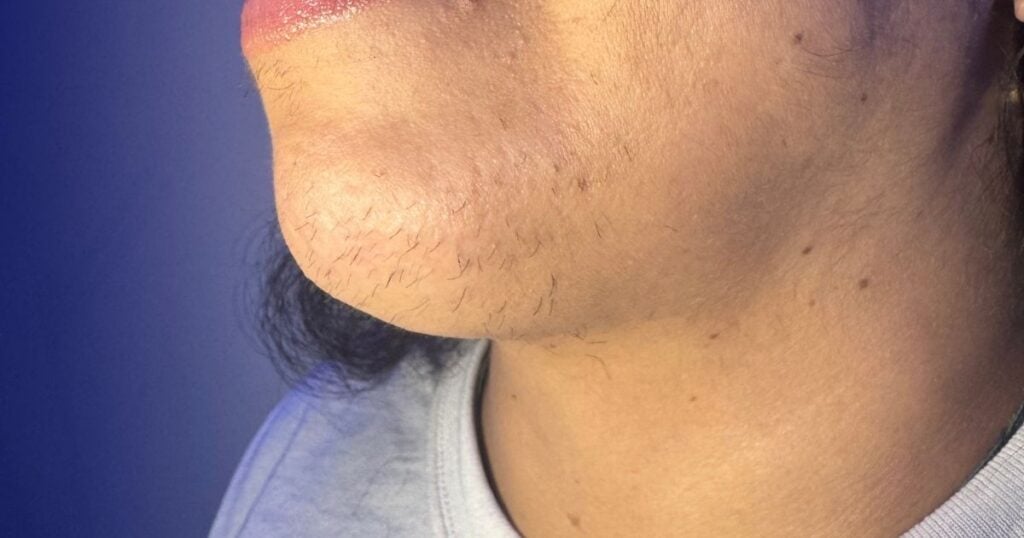
Everyone has it. It is normal, it does not signal that anything is wrong, and it is not the same as the coarse, dark terminal hair that grows on the chin or upper lip in a more male-pattern distribution. That distinction matters, because the two respond to removal methods very differently.
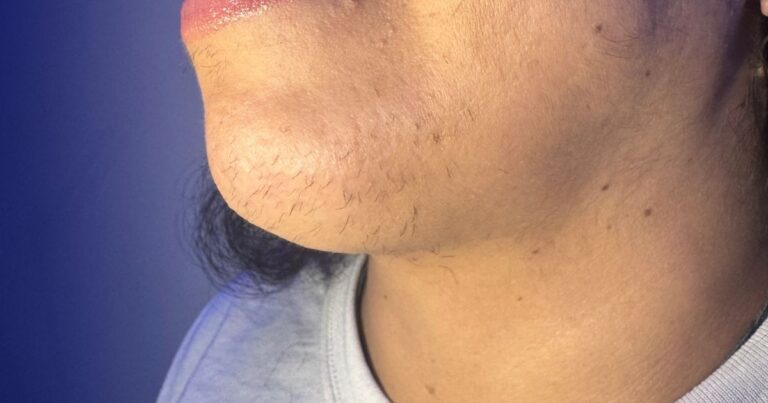
If what you are seeing is coarse and dark rather than fine and pale, that is terminal hair, and it is a different conversation, often hormonally driven. Our guide to chin and lip hair covers that case.

Worth saying plainly: you do not have to. Vellus hair is normal, harmless, and most people around you genuinely do not notice it.
If it bothers you, though, whether in photos, under makeup, or in the mirror, that is a completely valid reason to remove it, and you do not need a medical justification. Most clients who remove peach fuzz find that foundation sits noticeably smoother afterward, because there is no fine hair for product to cling to and separate around. Both choices are fine. This is about what you want, not what you should want.
Most peach-fuzz removal is temporary, because it takes the hair without touching the follicle it grew from. Your realistic options:
Dermaplaning. A professional treatment that uses a sterile blade at a precise angle to remove vellus hair along with the layer of dead surface cells. It is what most people mean when they talk about handling peach fuzz professionally, and it does two jobs at once: hair removal plus exfoliation, which is why skin feels remarkably smooth afterward and why makeup applies so evenly. Results typically last a few weeks. Our dermaplaning facial is the in-studio version.
Shaving. A facial razor works and is safe on facial skin. It is cheap and immediate, and it is back within days. Use a clean sharp blade and moisturize afterward.
Threading or waxing. Both remove hair from the root, so they outlast shaving by a few weeks. On fine vellus hair, threading gets fiddly because there is little for the thread to grip, and waxing takes surface skin cells too, which some sensitive skin does not tolerate well.
“Natural” methods. You can find plenty of homemade scrubs and pastes promising to remove peach fuzz. Be realistic: gentle exfoliation softens the appearance of fine hair slightly, but nothing you mix in your kitchen removes hair at the follicle. If a method claims to dissolve hair, it most likely just irritates your skin.
This is the question people ask most, and the answer surprises them: no, not effectively.
Laser treatment targets the pigment in a hair. Dark hair absorbs the energy, which damages the follicle. Peach fuzz is, almost by definition, hair without much pigment, so there is nothing for the laser to find. Pointing a pigment-seeking device at unpigmented hair produces no meaningful result no matter how many sessions you book, and the same limitation applies to at-home IPL devices.
So if you have been quoted for laser on your peach fuzz, or wondered why laser cleared your dark hair and left the fine pale hair behind, that is the mechanism. It is not a failure of the treatment. It is the treatment doing exactly what it does.
One method permanently removes peach fuzz: electrolysis, the only method the FDA recognizes for permanent hair removal.
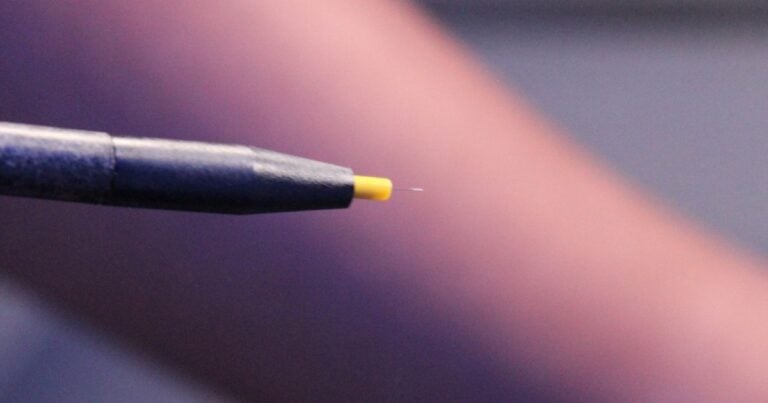
Electrolysis works completely differently from laser. A fine probe enters the follicle itself and a small, controlled current disables its ability to regrow. Because it targets the follicle mechanically rather than chasing pigment, color is irrelevant. It removes white, gray, blonde, red, and fine vellus hair as effectively as coarse dark hair, which makes it the only permanent option for the exact hair laser cannot see. The American Electrology Association puts it plainly: electrolysis removes all types of hair from all skin tones, and permanently destroys the growth cells so treated hairs never grow back.
Two honest expectations. It works follicle by follicle, so a full area takes a series of sessions spread across your hair’s growth cycle rather than one visit. And it is genuinely permanent for each follicle treated: that hair does not come back. If your goal is “gone” rather than “managed,” electrolysis is the route. Electrolysis at Nios Skin Lab starts at $30.
Most clients who want both outcomes pair the two sensibly: dermaplaning for the smooth, makeup-ready reset, electrolysis for the specific hairs they want permanently gone.
No. This is the most persistent myth in hair removal, and it is not true.
Shaving and dermaplaning cut hair at the surface, and neither touches the follicle. The follicle determines thickness, color, and growth rate. What people notice is the blunt tip: hair that grew out naturally has a fine tapered end, while cut hair has a flat edge that feels coarser to the touch for a while. It is a change in the tip, not in the hair. We break the whole myth down in does shaving make facial hair grow back thicker.
Is peach fuzz on the face normal?
Completely. Vellus hair covers most of the face and body on everyone: fine, soft, usually pale, and not a sign of a problem. It simply shows up more on some people and in some light. Plenty of clients tell us they had assumed peach fuzz was something to be embarrassed about. It is not, and if you want it gone for how it photographs or how makeup sits, that is reason enough. Nobody here asks you to justify it.
Can you get rid of blonde or light peach fuzz permanently?
Yes, with electrolysis, the only method that works regardless of hair color. Laser and IPL both need pigment to target, so neither treats blonde, white, or gray fine hair. Electrolysis disables the follicle itself, so pale hair responds exactly as dark hair does. This is the single most common reason people come to Nios Skin Lab after trying laser elsewhere: the hair left behind is almost always the light, fine hair laser never detected. A consultation gives you an honest read on what permanent clearing would involve for your face.
Does dermaplaning remove peach fuzz for good?
No. It removes it temporarily, typically for a few weeks, because the follicle stays intact. What dermaplaning does exceptionally well is combine hair removal with exfoliation, so skin is smoother and makeup sits better. For permanent removal you would want electrolysis. Think of dermaplaning as the reset before an event and electrolysis as the long game: they are not competing, and most clients who do both do them for different reasons.
How often can I have peach fuzz removed?
Dermaplaning suits a roughly monthly rhythm, which aligns with your skin’s natural cell turnover. Shaving happens as needed. Electrolysis follows your hair’s growth cycle across a series of appointments. Your practitioner maps the right cadence from a real look at your skin rather than applying a generic schedule, which is part of what the first visit is for.
Peach fuzz is normal, and removing it is optional. For the temporary, smooth-canvas version, our dermaplaning facial handles hair and dead surface cells in one pass. For permanently gone, including the pale, fine hair laser cannot touch, electrolysis is the method that gets there.
Book a consultation at Nios Skin Lab in Manhattan, Brooklyn, or Queens and we look at your skin and recommend honestly.