Damaged Skin Barrier: The Signs, the Causes, and How to Repair It
Tight, stinging, flaking, breaking out, and nothing works. That is usually a barrier problem, and…
They overlap, but they’re not the same job—here’s how to tell which one your skin is actually asking for.
“Should I get a chemical peel or a facial?” is one of the most common skin-care questions, and the honest answer is that they’re not really competitors—they do different jobs, and the right pick depends entirely on your goal. Sometimes they even work best together. Here’s a clear breakdown of how each works, what it treats, and how to choose.
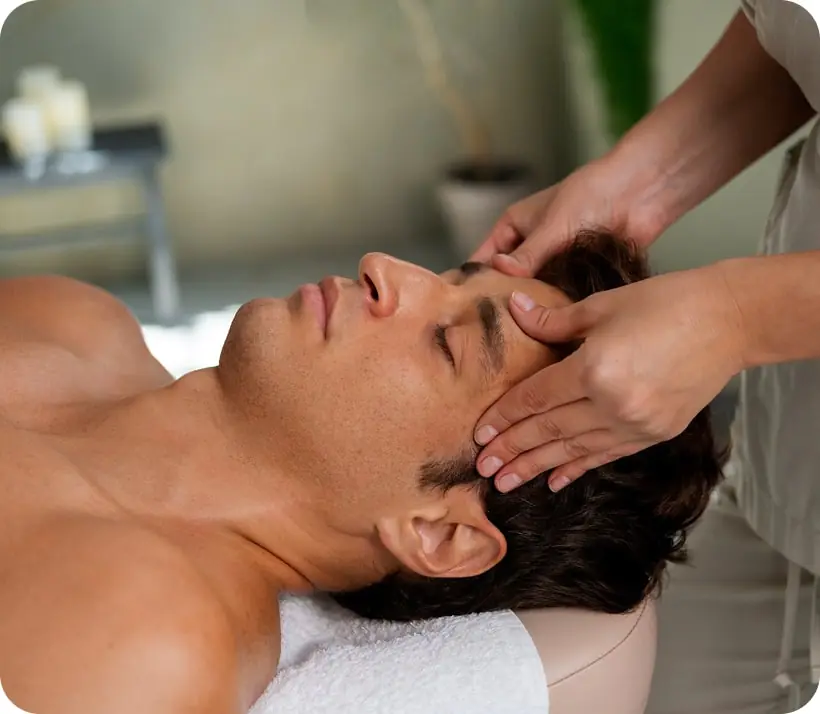
A facial is a broad, customizable treatment—cleansing, exfoliation, extractions, a mask, hydration—focused on overall skin health, maintenance, and a healthy glow. A chemical peel is a more targeted resurfacing treatment: a professional solution applied to dissolve the bonds between dead skin cells and accelerate cell turnover, working deeper to address specific concerns like texture, tone, and pigmentation. Put simply: a facial does more things at a gentler level; a peel does one thing—exfoliation and renewal—more intensively. At Nios, a peel isn’t a separate cold procedure; it’s the core of our Resurfacing facial, where a professional Pro Power peel is combined with cleansing and calming steps in one session.
A classic facial is about comprehensive skin health. A typical session cleanses, exfoliates the surface, includes extractions to clear congestion, and finishes with a mask and serums—customized to your skin that day. Facials are ideal for regular maintenance: keeping pores clear, boosting hydration, and maintaining a healthy glow. They’re gentle enough for a consistent rhythm and are the backbone of ongoing skin care rather than a one-time fix.
A chemical peel goes further on exfoliation specifically. A professional-strength solution is applied to loosen and remove dead, damaged surface cells and stimulate the fresh skin underneath to surface faster. Because it works deeper than the manual exfoliation in a standard facial, it’s more effective at addressing concerns rooted in texture and tone: dullness, rough texture, uneven tone, sun damage, and the look of fine lines or mild scarring. Peels come in different strengths, and the right depth depends on your skin and goal—which is exactly why professional guidance matters.
Matching the treatment to the concern is the whole game:
Yes—and that’s often the smartest approach. A peel integrated into a facial (as in our Resurfacing facial) gives you the deeper exfoliation of the peel alongside the cleansing, extraction, and calming steps of a facial in one visit—balanced so you leave looking fresh, not raw. Over time, many people alternate: regular maintenance facials with periodic resurfacing when texture or tone needs a reset. A professional can build that rhythm around your skin.
Chemical peels are powerful, and depth matters. A well-chosen professional peel is safe and effective; the wrong strength for your skin—or an at-home peel used too aggressively—can cause irritation or worse, especially on deeper skin tones or sensitive skin. This is genuinely a case for a trained professional who assesses your skin first, chooses the appropriate peel, and guides aftercare (including diligent sun protection afterward, since fresh skin is more sun-sensitive). For deeper or medical-grade concerns like significant acne scarring, a dermatologist may be the right referral—and we’ll tell you honestly if that’s the case.
Is a chemical peel better than a facial?
At Nios Skin Lab we steer you by your actual concern rather than by which treatment sounds more intensive. Sometimes the honest answer is a gentle facial, sometimes a peel, and often a rhythm of both, which a skin analysis sorts out in minutes.
Do chemical peels help with acne scars?
We stay honest about the limits here. Meaningful improvement in mild scarring and post-acne marks is realistic, complete erasure of deep textured scars usually is not, and we refer you to a dermatologist when that is what your skin needs.
Do facials actually help acne?
For breakout-prone skin, consistency beats intensity: regular extractions and the right actives, not one aggressive session. If your acne is severe or painful, we point you toward a dermatologist, because we work as a complement to medical care rather than a replacement.
How long does a chemical peel take to heal?
Our resurfacing facial pairs the peel with calming steps specifically so you leave looking fresh rather than red, and your esthetician walks you through what your skin does in the days afterward so nothing catches you off guard.
The right answer starts with looking at your actual skin. Our facials—including our Resurfacing facial built around a professional peel—are each customized after a real skin analysis, so you get the treatment your skin needs rather than the one with the biggest name. Nios Skin Lab has locations across Manhattan, Brooklyn, and Astoria.
Peel, facial, or both? Book a consultation and we’ll recommend based on your skin, honestly.