Hair Removal for Sensitive Skin: Your Gentlest Options
Hair removal for sensitive skin, method by method: what irritates reactive skin, what's gentler, and…
What electrologists do, why New York doesn't license them, and the questions to ask before you choose one in NYC. A guide from Nios Skin Lab.
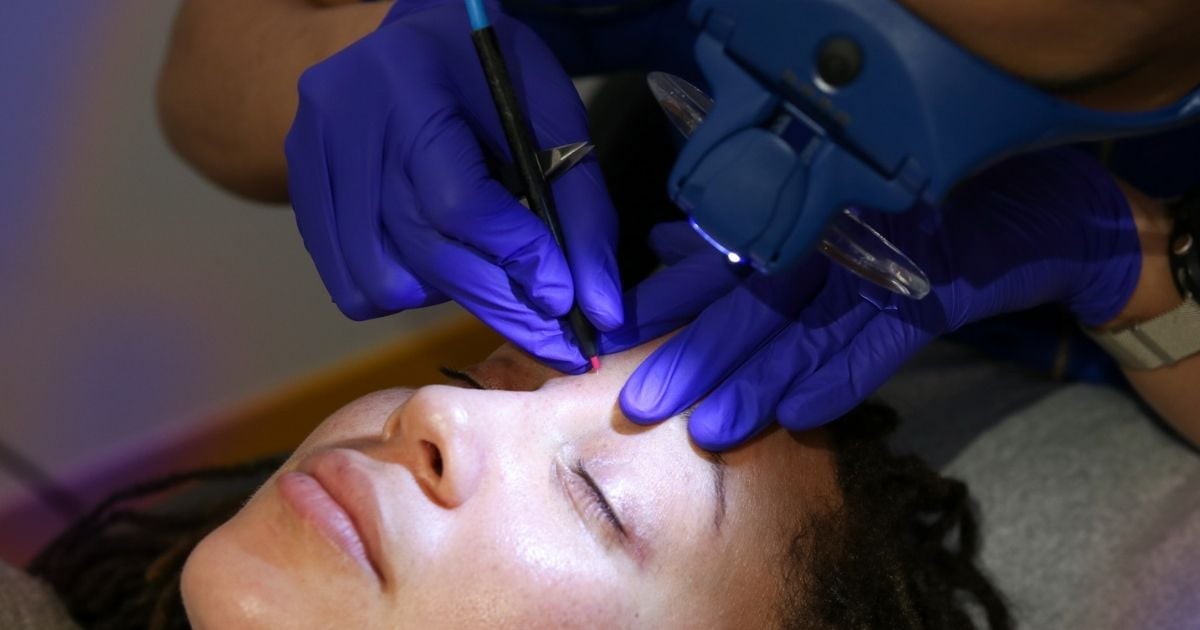
What is an electrologist? A hair removal specialist who slides a fine, sterile probe into one hair follicle at a time and sends a small current to destroy its growth center. Here’s the part most guides skip: New York doesn’t license electrologists. So in NYC, choosing one comes down to the questions you ask. Below are the ones we’d ask, whoever you end up booking.
An electrologist performs electrolysis. Electrolysis is permanent hair removal: it destroys each treated follicle’s growth center, so those hairs don’t grow back.
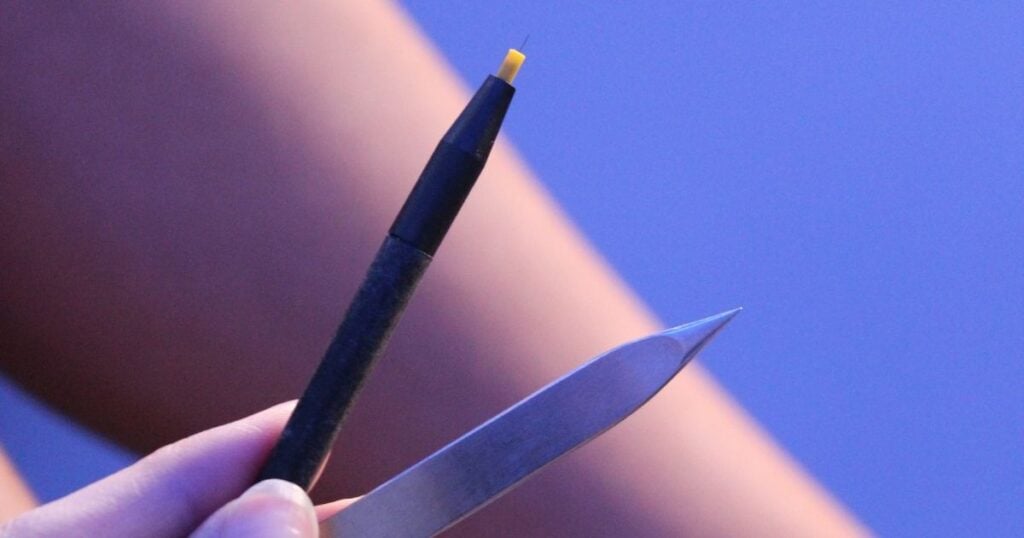
The work is small and exact. The probe slides into the natural opening the hair already grows from. A brief pulse of current travels to the base of the follicle, and the treated hair lifts out with tweezers. Then the next one. Angle, depth, and energy are judged hair by hair, which is why health guides put it plainly: successful hair removal depends on the skill of the person doing the electrolysis.
One thing to know before you search: the word gets used loosely. The American Electrology Association (AEA) notes that some businesses call themselves electrologists while offering only temporary removal or reduction. The question to ask is simple: is this probe electrolysis, one follicle at a time?
No. New York’s Department of State licenses appearance enhancement work: cosmetology, esthetics, nail specialty, natural hair styling, and waxing. Electrolysis isn’t on that list.
Elsewhere it often is. The AEA’s state-by-state list shows more than 30 states, plus Washington, D.C., that license electrologists, with required training that runs from a few hundred hours to 1,100 in Massachusetts. New York isn’t among them.
That applies to every electrologist in New York, ours included: there is no state electrolysis license to hold. What it means for you, wherever you book:
| In a state that licenses electrologists | In New York | |
|---|---|---|
| Training minimum | Set by the state | None set by the state; each studio sets its own |
| What you can verify | A state license, usually displayed | What the electrologist tells you, and what you see in the room |
| Other signals the AEA mentions | Association membership | AEA or state-affiliate membership, the AEA’s voluntary CPE credential, continuing-education certificates |
| Your best tool | The license lookup | The consultation |
Use this as a checklist at any consultation, ours included. The right person will be glad you asked.
Where and how they learned. Ask where they learned electrolysis, how long they practiced alongside someone experienced before treating on their own, and how they keep learning. The AEA’s guidance for states without a license is to look for association membership, its CPE (Certified Professional Electrologist) credential, and continuing-education certificates.
Hygiene you can see. Gloves during treatment, and sterile, disposable probes or sterilizing equipment such as an autoclave. Your electrologist should be able to talk you through their infection-prevention routine without hesitating. It matters: Cleveland Clinic notes small risks of infection from an unsterile needle, or scarring, when electrolysis isn’t done correctly. It’s fair to ask, “Is the probe sterile and single-use?”
A real consultation. Expect them to explain how electrolysis works, ask about how you’ve removed hair before and about your health (a pacemaker, for example), and leave room for every question. Ask what it will feel like. The honest answer: a small pricking sensation, similar to or slightly more than plucking. Our guide to whether electrolysis hurts goes deeper.
How they handle sensitive areas. Upper lip, chin, bikini line, chest: whatever you’re there for, you should feel in charge. Ask how they keep you covered, whether they explain before they start, and whether you can pause. The AEA is clear on confidentiality: a private treatment area, and no naming clients when showing past work.
Honest expectations. A good first conversation is clear about what electrolysis can and can’t do. Treated follicles don’t grow back. New hair can still appear with age or hormonal changes. Results vary by individual, so expect a conversation about your hair, not certainties. On timing, the honest answer is personal: your electrologist will build a schedule with you at your consultation. Our post on how many electrolysis sessions you need explains why.
Skin care around the work. Ask what redness to expect and how they protect your skin. Healthwise notes that electrolysis can cause scarring or changes in skin color in some people, which is why technique matters. We cover this in does electrolysis leave scars?
The New York practicalities. Pick a studio you can reach easily from home or work. If you need step-free access, ask before you book.
Fit. The AEA’s most human piece of advice: electrologists differ in personality, technique, and style, and it’s fine to meet more than one before you choose.
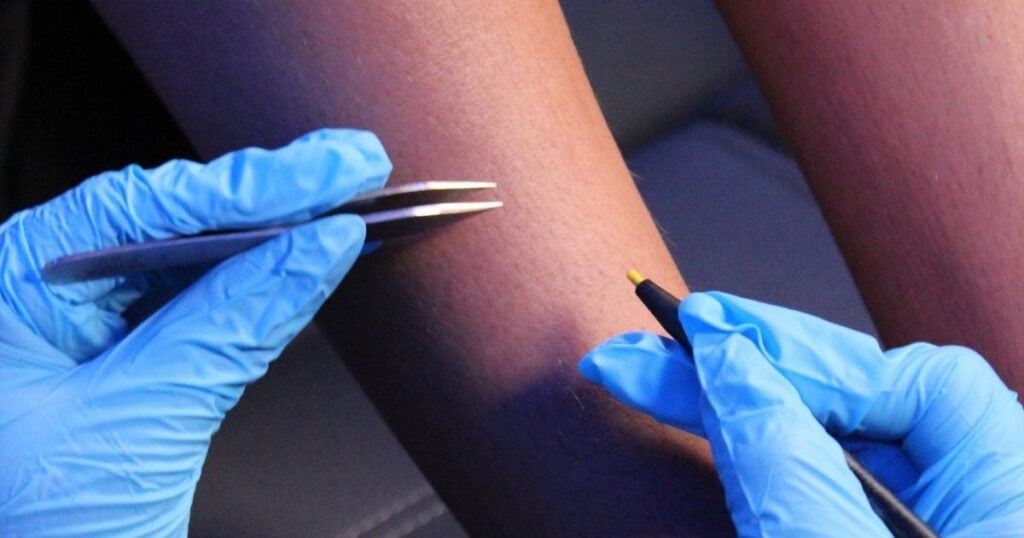
Here’s how that checklist plays out with us.
It’s your choice. Clients can choose their electrologist. If a friend recommended someone, or you’d like the same person each time, tell us when you book.
One training, different experience. Everyone on our electrolysis team, junior or senior, gets the same training; the senior members bring more hands-on experience. We also run our own electrolysis training program.
The conversation comes first. Your first visit starts with a consultation about your hair, your skin, and your goals, before any hair is treated. Treatment uses a sterile probe. Bring the questions above; we’d rather you ask them.
You don’t have to come alone. An adult client may bring a companion into the treatment room.
We can’t hand you a New York license to check. What we can do is answer every question on this list, in the room, before you decide.
No. Esthetics is a licensed profession in New York; electrolysis is a separate skill with no state license of its own. Some people do both. At Nios Skin Lab, our facial team are licensed estheticians.
Don’t wax, pluck, or tweeze the area, and skip shaving and depilatory creams for at least four days, so there’s hair for your electrologist to work with. If you’re worried about sensation, Nios Skin Lab sells numbing cream that you apply yourself before your appointment. Our pain management guide explains how.
Yes. General health guidance says electrolysis shouldn’t be done inside the nose or ears, and at Nios Skin Lab we don’t work inside the nose or the deep ear canal. We treat hair growing from a mole only after a dermatologist has examined it. The same guidance says electrolysis isn’t suitable if you have a pacemaker, so mention any implanted device at your consultation.
No. Electrologists are not doctors, though dermatologists can also perform electrolysis. Nios Skin Lab is a non-medical personal-care studio, and the electrolysis itself is done by our electrologists.
Choosing an electrologist in a state with no license to check takes a little more homework. It’s worth it: this is someone who will work close to your skin. We’d love to answer the list in person at Columbus Circle, a short walk from 59th St–Columbus Circle; in Astoria, on the ground floor on Steinway St; or in Brooklyn, at street level near Atlantic Terminal. Astoria and Brooklyn are both step-free. Book your consultation when you’re ready.