Menopause and Your Skin: What Changes and Why
Dryness, thinning, lost firmness, sometimes breakouts. The hormonal mechanism behind each change, and what actually…
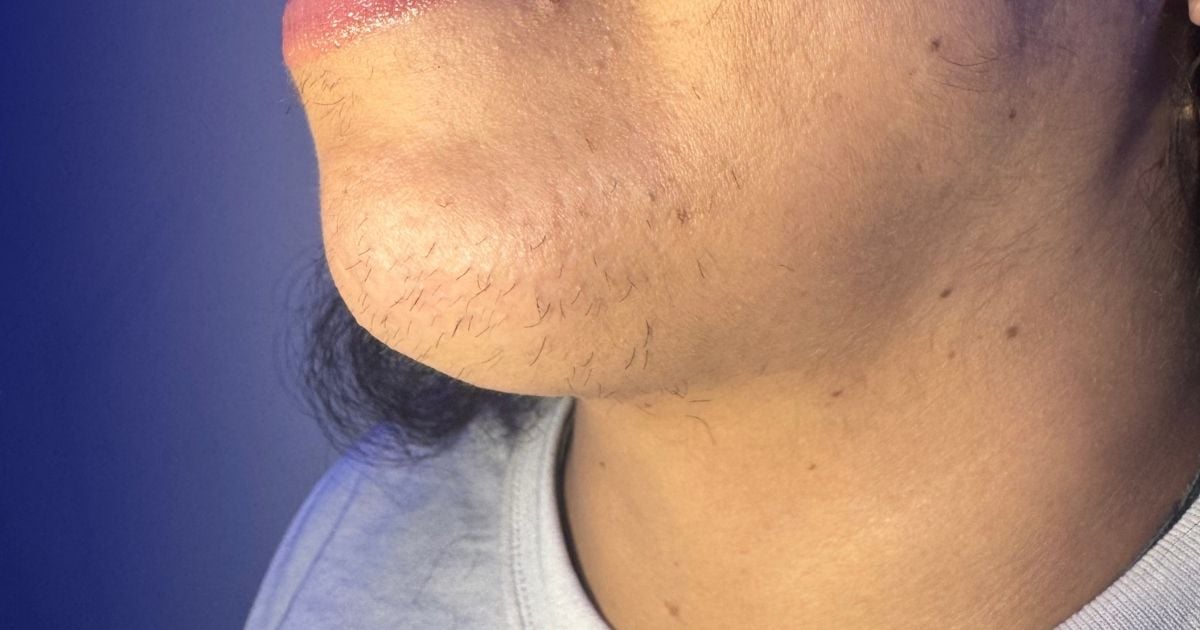
Why the tweezers never win—and the one method that actually ends the cycle.
If you’re here, you’ve probably been fighting the same chin hairs for years—tweezing them out, watching them come back, tweezing again. The frustrating truth is that every temporary method is designed to lose this fight: they remove the hair while leaving the follicle intact, so regrowth is only a matter of time. If you want chin hair gone permanently, there’s exactly one method that delivers that, and this explains why—and what to expect.
The only way to remove chin hair permanently is electrolysis—permanent hair removal, not just reduction. It works by inserting a fine probe into each follicle and delivering a small current that disables its ability to regrow. Once a follicle is properly treated, that hair is gone for good. Everything else—tweezing, waxing, threading, shaving, even laser—is either temporary or, in laser’s case, reduction rather than removal.
Chin hair feels uniquely persistent for real reasons. It’s often hormonally driven—the chin is a classic spot for coarse, dark hair influenced by androgens, which is why it commonly appears or intensifies with PCOS, menopause, and other hormonal shifts. Hormonal hair also tends to be mixed: a few coarse dark hairs alongside finer, lighter ones. And because the chin is right on your face, every hair feels conspicuous. That combination—hormonally reinforced, mixed in texture, highly visible—is exactly why temporary methods feel like such a losing battle here.
Each temporary method fails at the chin for its own reason, but they share one flaw: none of them touches the follicle.
Electrolysis solves the exact problems that make chin hair stubborn. Because it destroys the follicle itself, the treated hair doesn’t regrow—it ends the cycle instead of resetting it. Because it targets the follicle mechanically rather than chasing pigment, it removes every hair color, including the fine and light hairs laser can’t see—which matters enormously for mixed hormonal chin hair. And because it treats one follicle at a time, it offers precise control on a small, visible area like the chin, with no over-treating of the surrounding skin. It’s the tool built for this exact job. Our chin and lip hair removal page covers the specifics.
Two honest expectations. First, permanence takes a series of sessions, not one visit—electrolysis can only treat follicles during their active growth phase, and they cycle individually, so multiple appointments are needed to catch them all. The upside is that the results are genuinely permanent, unlike anything temporary. Second, if a hormonal driver is active, it can switch on new follicles over time, so some ongoing sessions may be needed as new hair emerges—the treated follicles stay gone, but new growth needs its own treatment. Many people find the chin is a relatively quick area to see meaningful progress. A free consultation is the best way to get a realistic estimate for your chin specifically.
What is the best permanent chin hair removal method?
Electrolysis—it’s permanent hair removal, and it’s especially well-suited to the chin because it removes hair of every color and texture and treats one follicle at a time for precision. Laser only reduces hair and can’t target the fine or light chin hairs hormones often produce, which is why electrolysis is the more reliable permanent choice here.
Concierge Note: The chin is one of the most common areas we treat, and often one of the most satisfying for clients—it’s visible, so the results are visible too. A free consult will give you a realistic sense of the plan.
Why does my chin hair keep coming back?
Because temporary methods—tweezing, waxing, shaving—remove the hair but leave the follicle intact, so it regrows every time. Chin hair is also often hormonally driven, which keeps producing growth. The only way to stop the cycle is to disable the follicle itself with electrolysis. If it appeared or worsened suddenly, it’s also worth checking the hormonal cause with a doctor—see our PCOS guide.
Concierge Note: If you’ve been tweezing the same hairs for years, that’s the cycle we end. And a heads-up: it’s best to stop tweezing before starting electrolysis, since the hair needs to be present in the follicle to treat—shaving between sessions is fine.
How long does it take to remove chin hair permanently?
It takes a series of sessions over time, because electrolysis can only treat follicles in their active growth phase and they cycle individually. The exact number depends on your hair density and whether a hormonal driver is active. The chin is often a relatively efficient area, and unlike temporary methods, the sessions add up to an actual finish line rather than endless maintenance.
Concierge Note: We’ll give you a realistic, honest estimate for your chin at the consult rather than a generic timeline—every chin is different, and we’d rather set the right expectation up front.
Is tweezing chin hair making it worse?
Tweezing doesn’t make hair grow back thicker, but repeatedly pulling from the root can distort the follicle over time and won’t ever reduce the hair—it always regrows. If you’re planning electrolysis, it’s best to stop tweezing beforehand, because the hair needs to be present in the follicle to be treated. Shaving in the meantime is completely fine.
Concierge Note: Swap the tweezers for a razor between now and your first session—it keeps the follicles intact and treatable. We’ll give you the simple do/don’t list at your consult.
You don’t have to keep tweezing the same hairs forever. Electrolysis is the one method that removes chin hair permanently—on every hair color, with precision suited to the face. Nios Skin Lab has specialized in electrolysis since 2009 across Manhattan, Brooklyn, and Astoria.
Done fighting your chin hair? Book a free consultation and let’s make it permanent.