How to Get Rid of Peach Fuzz on Your Face
You notice it in certain light: a soft, pale halo of fine hair along your…

Menopause shifts your hormones—and your chin hair. Here's why it happens, why laser can't fix it, and how electrolysis removes it permanently.
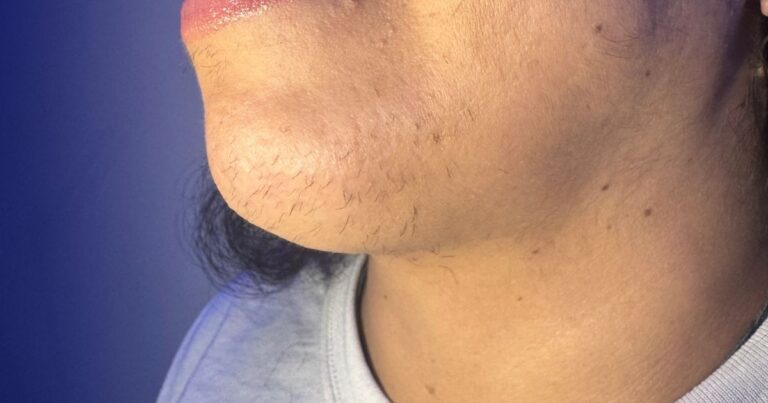
At some point during perimenopause—or after—a routine begins: you find a hair on your chin. Then another. Then a cluster on your upper lip that definitely wasn’t there last month. You reach for the tweezers, again, and wonder what exactly your hormones think they’re doing.
They’re following a precise biological sequence. Estrogen levels drop, the androgen-to-estrogen ratio shifts, and follicles that were quietly producing fine, near-invisible hair start generating something coarser and more visible. Menopause facial hair removal is one of the common conversations we have at Nios Skin Lab—because the biology is universal, the frustration is real, and the permanent solution exists. It just isn’t (always) laser.

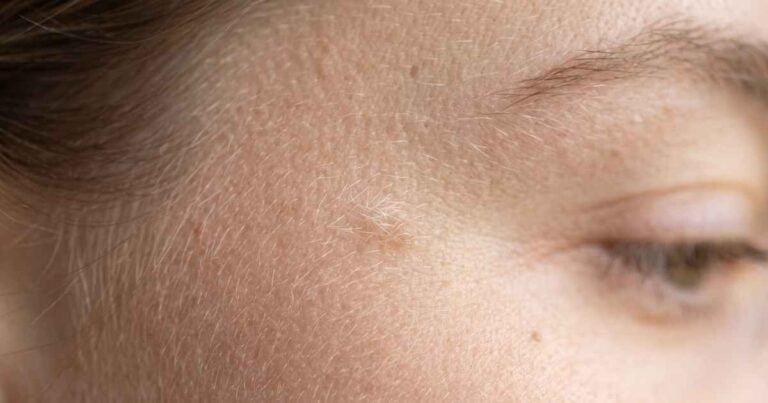
During reproductive years, estrogen and androgens maintain a balance that keeps androgen-sensitive follicles producing fine vellus hair on the face. As estrogen declines through perimenopause and menopause, the relative influence of androgens—primarily testosterone and its more potent derivative, dihydrotestosterone (DHT)—increases. Androgen-sensitive follicles on the chin, upper lip, and jaw respond by shifting their output: finer vellus hair gives way to thicker, deeper, more persistent terminal hair.
This is the same mechanism behind hormonal hirsuitism in conditions like PCOS—except here, the trigger is age-related hormonal change rather than a chronic imbalance. The follicles aren’t malfunctioning. They’re responding accurately to a changed hormonal environment. That distinction matters because it tells you something important: the hair is structural now, not temporary. It won’t resolve when hormones “settle.” The follicle has converted.
During perimenopause, hormonal fluctuations mean new follicles can continue to be recruited as estrogen continues to fall. Once post-menopausal and levels stabilize, new recruitment slows significantly. Either way, follicles that have already converted won’t reverse on their own.
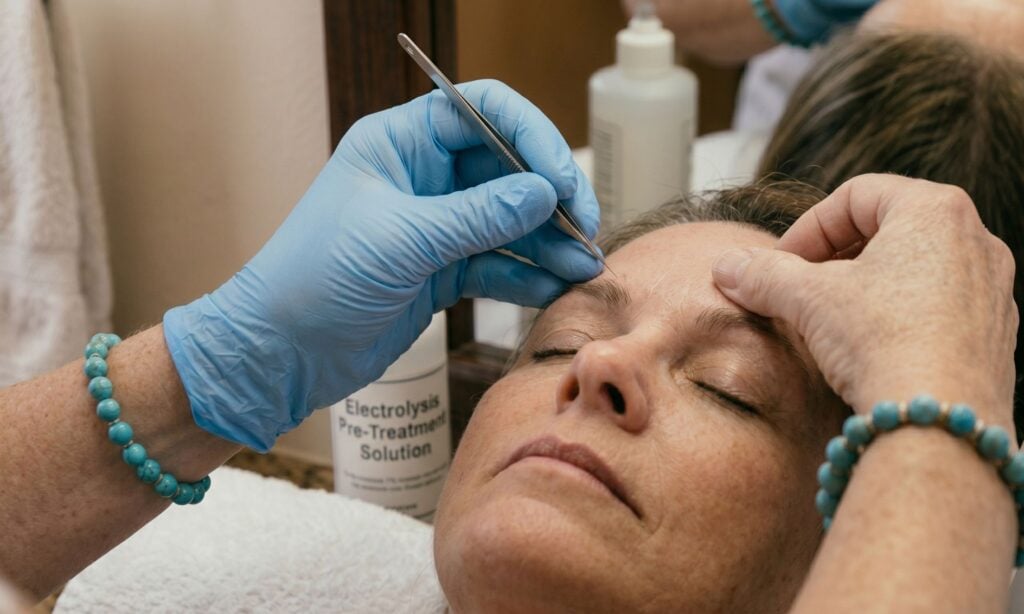
Shaving, threading, and waxing share a fundamental limitation: they address the hair without addressing the follicle. For fine or infrequent hair, that’s a workable compromise. For the coarser, more deeply rooted terminal hair that develops during hormonal transition, it becomes a daily or weekly maintenance obligation with no exit strategy.
Shaving produces regrowth on the face within 24 to 48 hours—not because shaving stimulates growth (the coarseness is blunt-cut regrowth, not a structural change), but because the hair cycle on terminal follicles is faster and more consistent. Threading and waxing pull the hair from the root but leave the follicle intact, which simply regenerates. Repeated mechanical pulling can also cause follicle distortion over time—irregular regrowth patterns and micro-scarring that make later permanent treatment more complicated.
Laser is the most common misconception here, and worth addressing directly: laser targets melanin in the hair shaft. Post-menopause, the hair you’re trying to remove is often gray, white, or significantly depigmented—which contains insufficient melanin for laser to detect or destroy. For women in the earlier stages of the hormonal transition who still have darker facial hair, laser may offer partial, temporary reduction. But it is not classified as a permanent method, and it cannot address the unpigmented hair that tends to dominate the later picture.
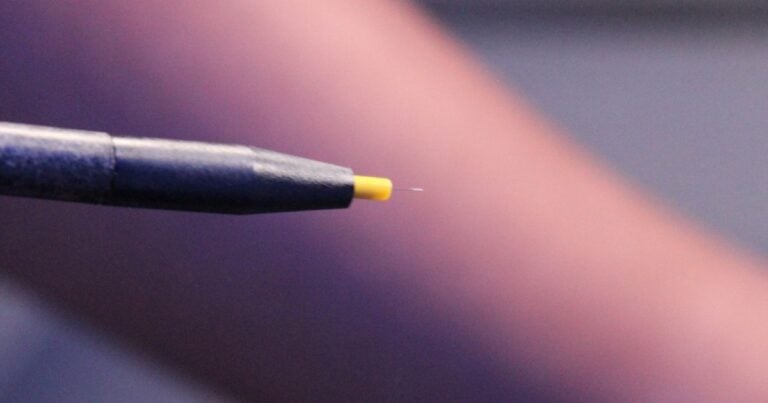
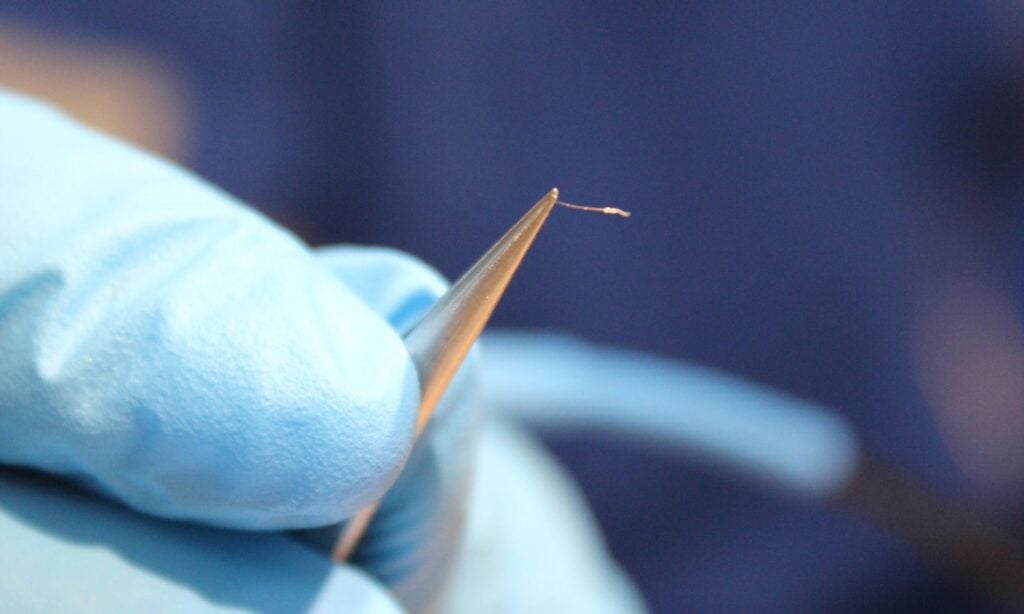
Electrolysis works by inserting a fine probe into each hair follicle and delivering a precise electrical current that destroys the follicle’s capacity to regenerate—permanently. It is the only hair removal method the FDA classifies as permanent.
The defining advantage for menopausal clients is that electrolysis is completely color-independent. It works on gray hair, white hair, and the full unpigmented spectrum. It works on all skin tones and adapts to the changes in skin texture and sensitivity that accompany hormonal transition. There is no melanin requirement, no skin type exclusion, no workaround needed.
Hormones may turn the lights on, but electrolysis shuts the factory down.
At Nios Skin Lab—with locations in Manhattan, Brooklyn, and Queens—clients managing hormonally-driven facial hair are among the most consistent profiles across all three locations. The pattern is familiar: chin, upper lip, sometimes the jaw and neck. The approach is methodical—working through each zone systematically, targeting follicles in their active growth phase to maximize permanent results per session.
If you’re in perimenopause, one honest reality: because hormonal fluctuations continue during this phase, new follicles can be recruited into terminal hair production even while existing ones are being treated. This doesn’t mean electrolysis isn’t working—every treated follicle is gone permanently and will not return—but it does mean the total picture can feel like a moving target at first. Most clients find density noticeably decreasing within the first few months, even as occasional new hairs appear in previously untreated areas.
Starting post-menopause, when hormone levels have stabilized, gives you a more static target: the hair you have is largely the hair you’ll be treating, and progress tends to feel more linear.
Either way, think of it like compound interest. Every session adds to a permanently smaller total. The trajectory is always forward.
A free patch test is the natural starting point—it gives you a direct read on the sensation in your specific zone and lets your electrologist map the area before you commit to a course of treatment.
Sessions for focused facial zones typically run 15 to 30 minutes. Frequency starts at every 4 to 6 weeks, tightening to the active growth cycle as the hair thins. The sensation is brief, localized heat at each insertion—most clients find the anticipation worse than the reality. Redness typically clears within a few hours. There could be some downtime but most clients return to their regular day immediately.
Post-session care is straightforward: skip heavy makeup over the treated area for 24 hours and avoid the sun—especially relevant during any period of hormonal skin transition, when sensitivity can be elevated.
The goal isn’t managing the chin hair indefinitely. It’s treating the architecture so you stop managing it at all.
If menopause has sent your facial hair somewhere you didn’t invite it, a consultation at Nios Skin Lab — Manhattan, Brooklyn, or Queens — maps the zone, sets a realistic timeline, and gives you a permanent exit from the tweezer routine.