Compare Electrolysis vs. Laser Hair Removal
Permanent Hair Removal vs. Permanent Hair Reduction
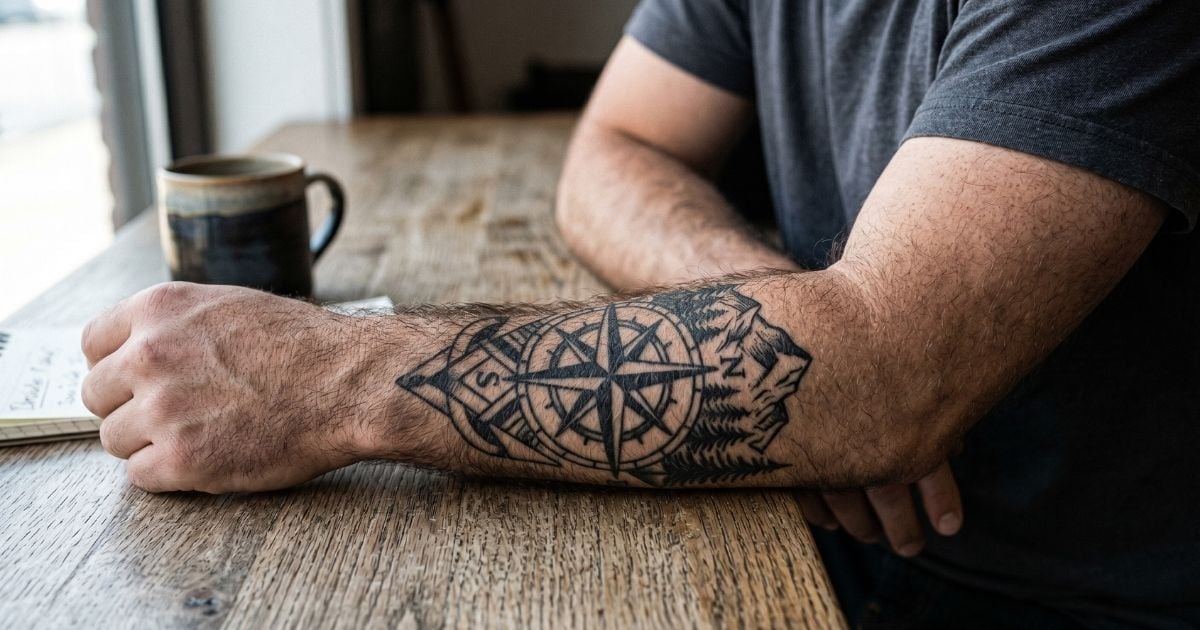
If you’ve got hair growing over ink, the method you choose matters more than usual.
You invested in the tattoo—the design, the sitting, the healing. Now there’s hair growing over it, and the obvious options suddenly come with a catch. The short version: laser treatment should not be used directly over a tattoo, because the same thing that makes laser work is what puts your ink at risk. Electrolysis doesn’t have that problem. Here’s why, and how to remove hair over a tattoo without damaging the art.
Laser hair reduction works by aiming concentrated light at the pigment (melanin) in your hair—the energy is absorbed by the dark pigment, heating and damaging the follicle. The problem is that tattoo ink is pigment too. A laser passed over a tattoo can’t tell hair pigment from ink pigment, so the ink absorbs that energy—which can fade the tattoo, blur its lines, and cause burns or blistering of the skin. The effect is most pronounced on dark ink. This is why reputable providers won’t laser directly over a tattoo, and will shield tattooed areas when treating the skin around them.
So laser around a tattoo, with the ink protected, can be fine. Laser directly on the tattoo is the part that’s off the table—and if hair is growing over the design itself, that’s exactly the spot you need treated.
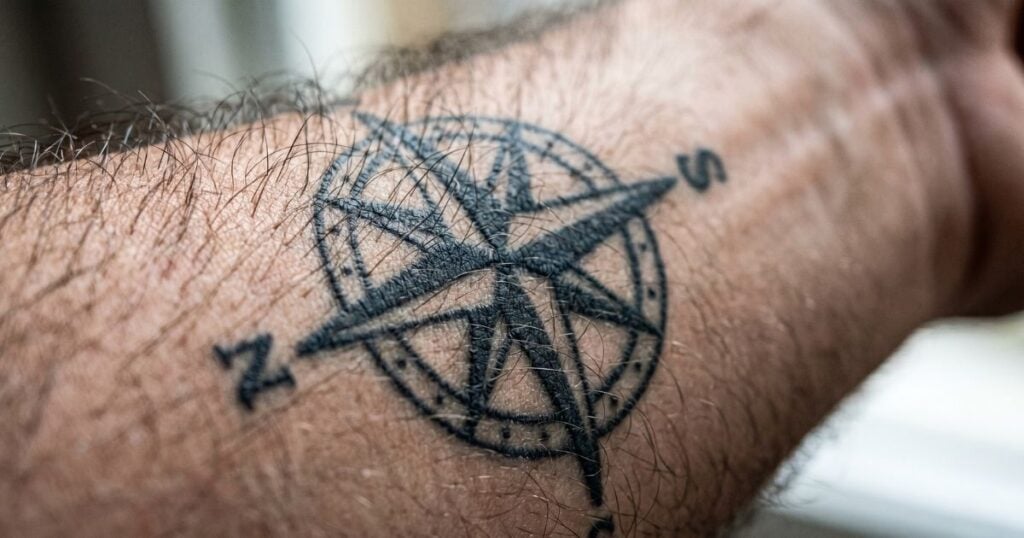
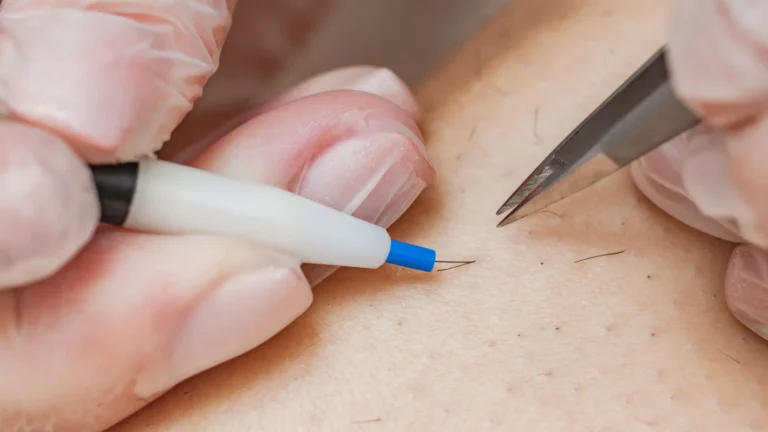
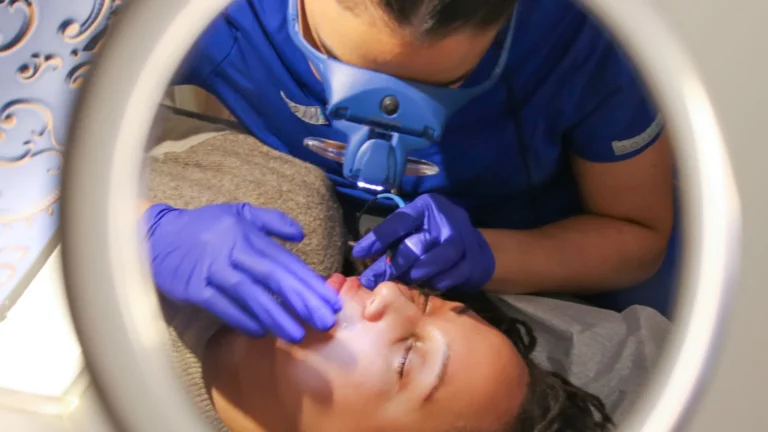
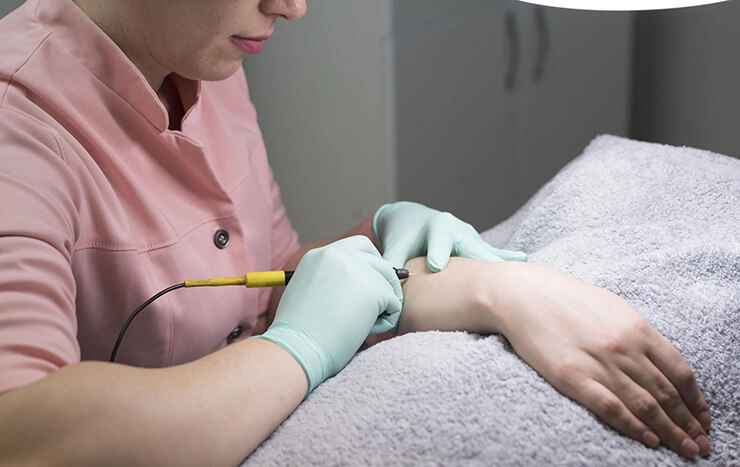
Electrolysis removes hair by a completely different mechanism. A fine, sterile probe slides into the natural opening of each follicle and delivers a small, controlled current to the growth center, disabling the follicle. It doesn’t target pigment at all—which is the whole reason it works on every hair color and, critically here, doesn’t interact with tattoo ink. The current acts on the follicle beneath the surface; the ink, which sits in a deeper layer of skin, is left intact. That makes electrolysis the permanent hair-removal method that can be used directly over a tattoo without fading or distorting it.
Your other choices over ink are all temporary. Shaving is safe once a tattoo is fully healed, but it’s back in a day or two. Waxing can work but risks irritating tattooed skin and isn’t advisable while a tattoo is still healing. Depilatory creams sit on the surface and don’t affect ink, but again, they’re short-lived. Among methods that are both safe over a tattoo and permanent, electrolysis stands alone—it’s the only one that closes the follicle for good without touching the pigment. If permanent is the goal and the hair is on the tattoo, this is the route. (If you’re weighing the two methods generally, our electrolysis vs. laser guide covers the broader comparison.)
One important condition: the tattoo should be fully healed before any hair removal over it, electrolysis included. Working on freshly tattooed or still-healing skin isn’t appropriate—the skin needs to have recovered completely first. If your tattoo is recent, give it the full healing time your artist recommended before booking. At a consultation, we’ll look at the area, confirm the skin is ready, and map the approach—particularly useful if the hair is over a detailed or colored piece you want fully protected.
Hair over ink shows up most often where tattoos and body hair naturally overlap: forearms and hands, as well as legs, chest, and shoulders. It also matters for permanent makeup—a form of tattooing—where precise hair removal around brows or the lip line calls for a method that won’t disturb the pigment. In every case the principle is the same: because electrolysis ignores pigment, it treats the hair while leaving the ink exactly as your artist made it.

Will electrolysis fade or damage my tattoo?
This is the question almost everyone with a tattoo asks first, and it is a fair one, because you protected that art and do not want hair removal undoing it. Electrolysis is specifically the method that leaves ink alone, and your electrologist walks you through exactly what to expect at your first visit.
Can I get laser treatment if I have tattoos?
Plenty of people with sleeves or larger pieces end up using different methods for different areas. If the hair you care about sits right on the ink, that is the clearest case for electrolysis: no shielding, no compromise, no risk to the design.
Does the tattoo need to be healed first?
If you are planning a new tattoo in an area you also want hair-free, sequence it: let the tattoo heal fully, then start electrolysis. We are glad to talk through timing at a consultation so the two do not collide.
Does electrolysis hurt more on tattooed skin?
As with any zone, we adjust as we go and check in on how it is feeling. If sensation is a concern, raise it at the consultation so we can plan around it.
If hair is growing over a tattoo and you want it gone for good, electrolysis is the one permanent method that removes the hair without putting your ink at risk—because it works on the follicle, not the pigment. Once your tattoo is fully healed, we’ll assess the area and build a plan that protects the design. Nios Skin Lab has specialized in electrolysis since 2009 across Manhattan, Brooklyn, and Astoria.
Hair over your ink? Book a free consultation and we’ll remove it safely—tattoo intact.