Hair Removal for Sensitive Skin: Your Gentlest Options
Hair removal for sensitive skin, method by method: what irritates reactive skin, what's gentler, and…
When your skincare routine stops delivering, professional treatments shift the baseline. Learn which professional treatments work—and why Nios Skin Lab is NYC’s destination for facials and permanent hair removal.
This is where professional skincare comes in. Not as a luxury upgrade. As the actual next step.
The difference between what you buy at Sephora and what we use at Nios isn’t packaging or price—it’s chemistry. Professional-grade peels, dermaplaning, and facials use concentrations and delivery systems that consumer products aren’t permitted to contain. Glycolic acid in a drugstore product caps around 10%. In a treatment room, we work with 30–50%. That difference isn’t marketing—it’s the actual reason your at-home routine plateaued.
“Professional-grade” doesn’t mean “more aggressive.” It means the right concentration, delivered the right way, calibrated to your skin’s current state. Stronger isn’t always better. Precise is better.
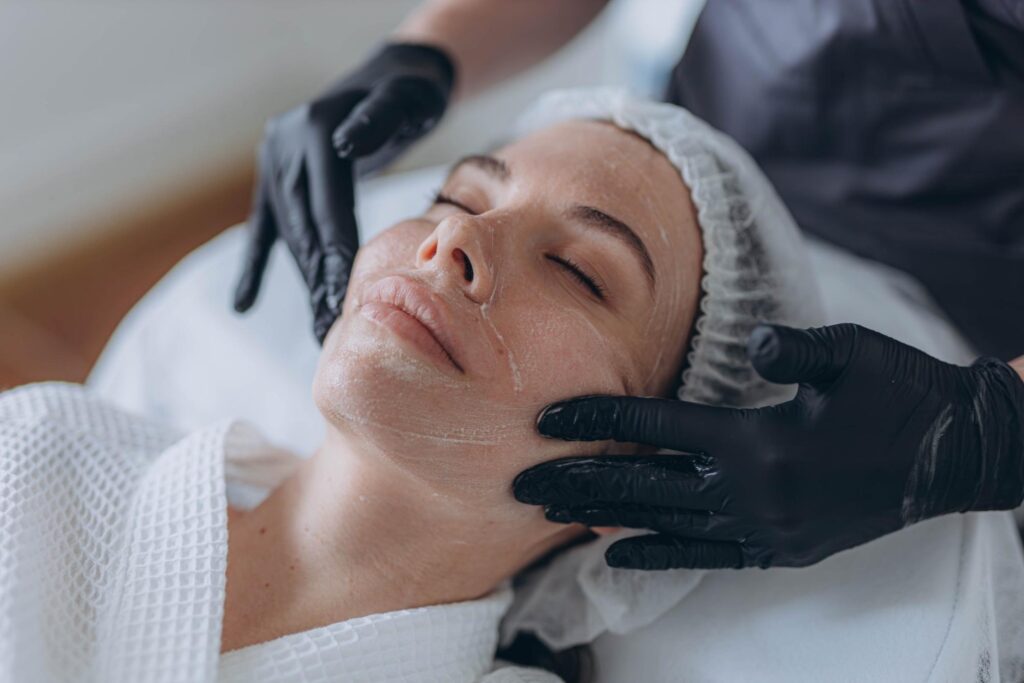
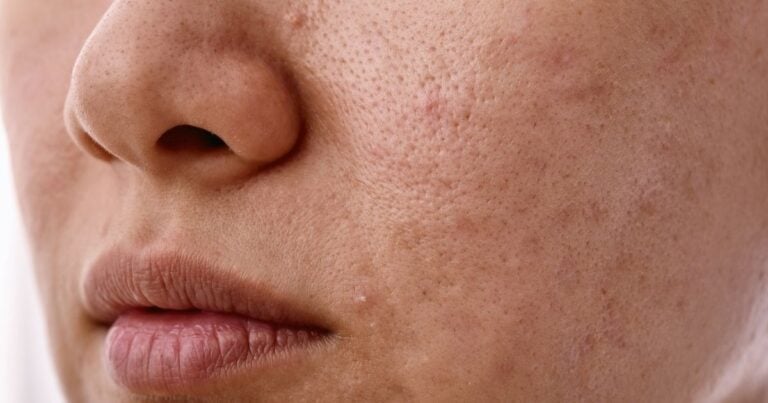
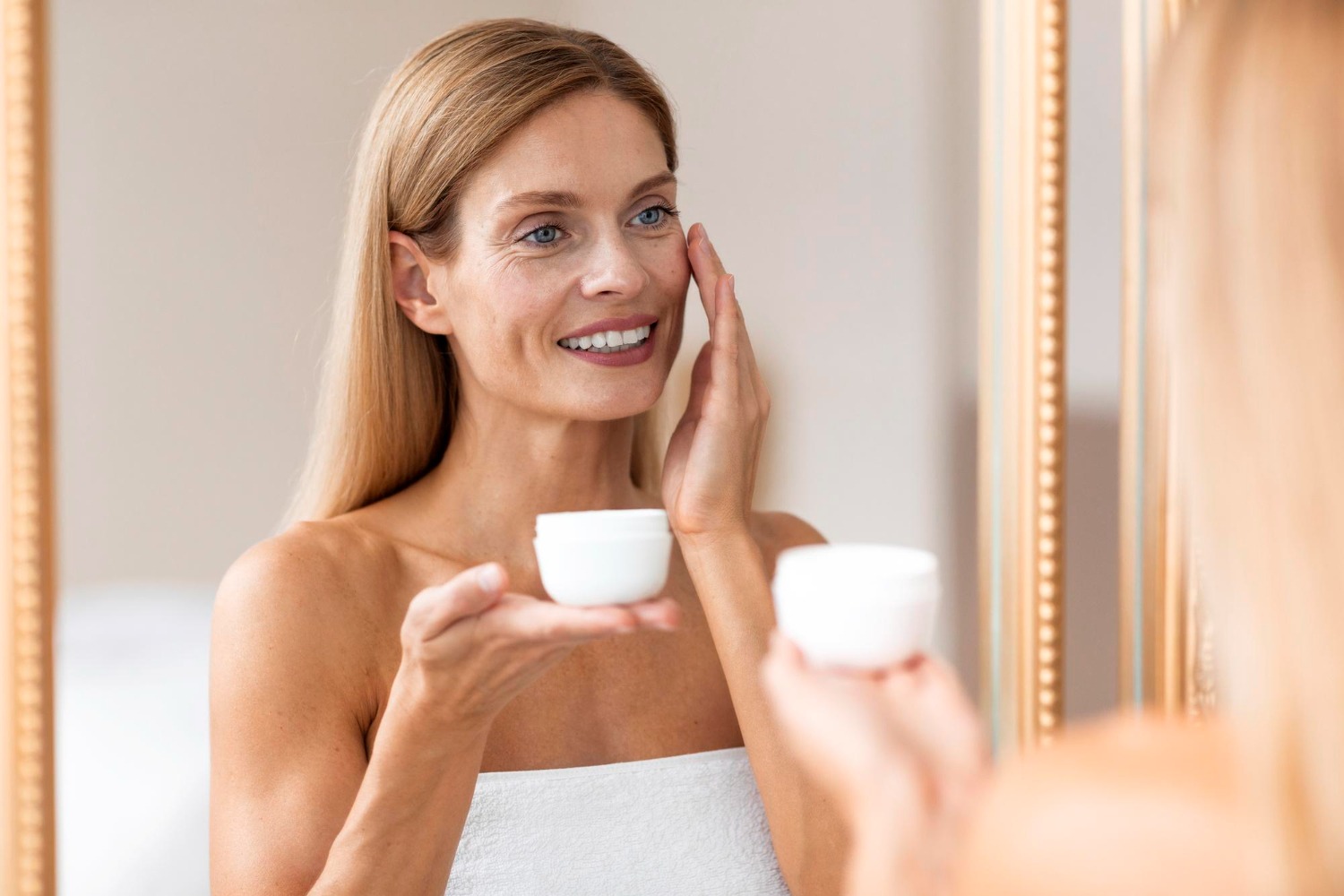
The clearest sign is the one that’s already been bothering you: products that used to work just…don’t anymore. You’re still doing everything right, but the mirror tells a different story.
Watch for these patterns:
These shifts aren’t failures of discipline. They’re biology. Your skin’s natural cell turnover slows down, collagen production drops, and repair systems get less efficient (NCBI). The product that worked at 32 stops working at 38 because the skin underneath it is different.
When two or three of these patterns show up together, it’s usually time for clinical intervention—not because your routine is wrong, but because your routine has done what it can.
Timing varies. Some people notice the plateau in their late twenties from cumulative sun exposure. Others coast on good genetics into their forties. Environmental load, hormonal shifts, family history—all of it matters more than the number on your driver’s license.
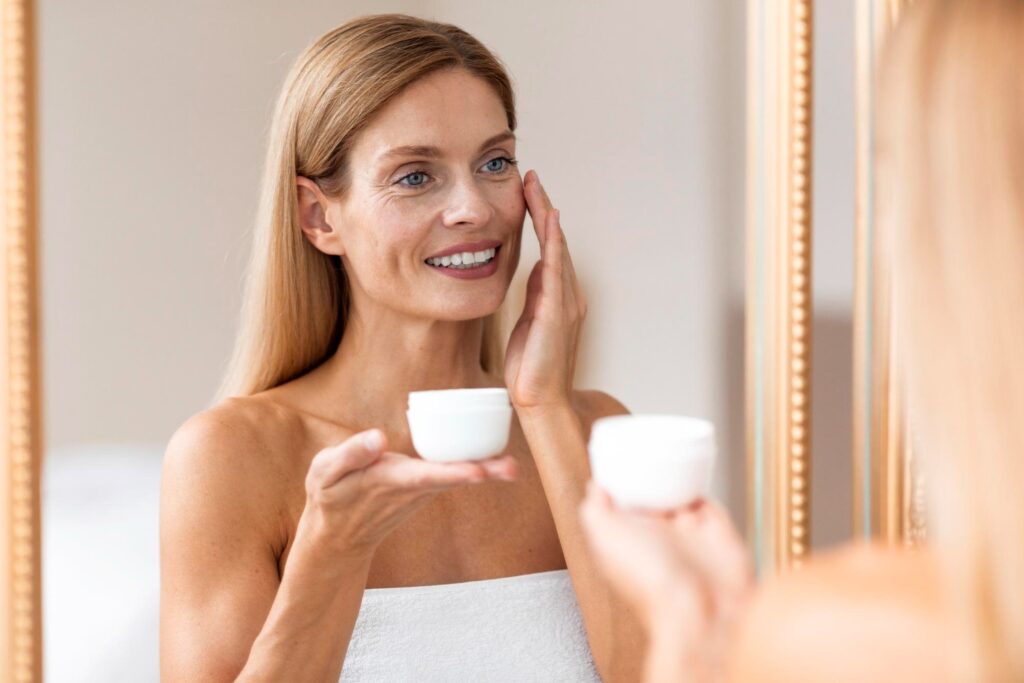
Three things separate professional treatments from at-home care, and none of them are marketing.
1. Concentration. A professional glycolic peel uses 30–50% active acid. The version sold to consumers caps at 10%. Six months of disciplined at-home glycolic use ≈ one professional session. Not because your products are bad—because there are good reasons the FDA limits what you can apply unsupervised.
2. Delivery. Professional treatments use penetration enhancers, controlled pH, and specific application techniques to drive active ingredients into the layers where they actually do work (NCBI). Topical at-home application stays mostly on the surface.
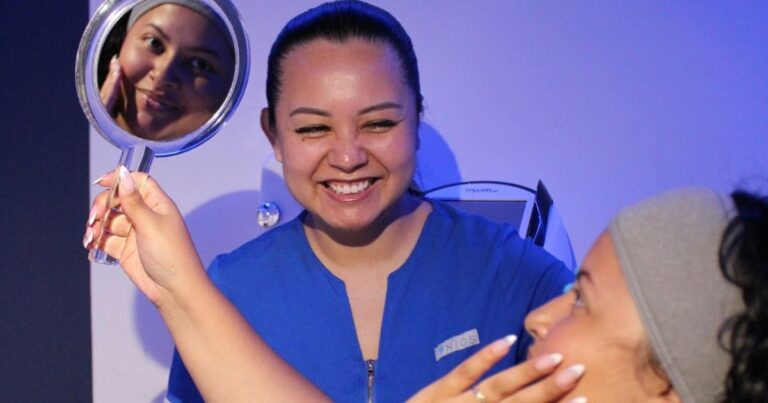
3. Real-time calibration. During a Nios facial, your practitioner monitors how your skin responds and modulates accordingly—pulling back if barrier function shows stress, pushing further if tolerance allows. A mirror can’t tell you when to stop. A trained eye can.
The biggest at-home risk isn’t using a product that’s too weak. It’s using one that’s too strong without the feedback loop to know when to stop. Most “I broke out from a serum” stories are this.
The economics often surprise people too. Six professional sessions usually cost what serious skincare obsessives spend on premium products in a year, and the visible change is on a different scale. Professional treatments skip the trial-and-error cycle of buying things, trying them for six weeks, and concluding “maybe?”
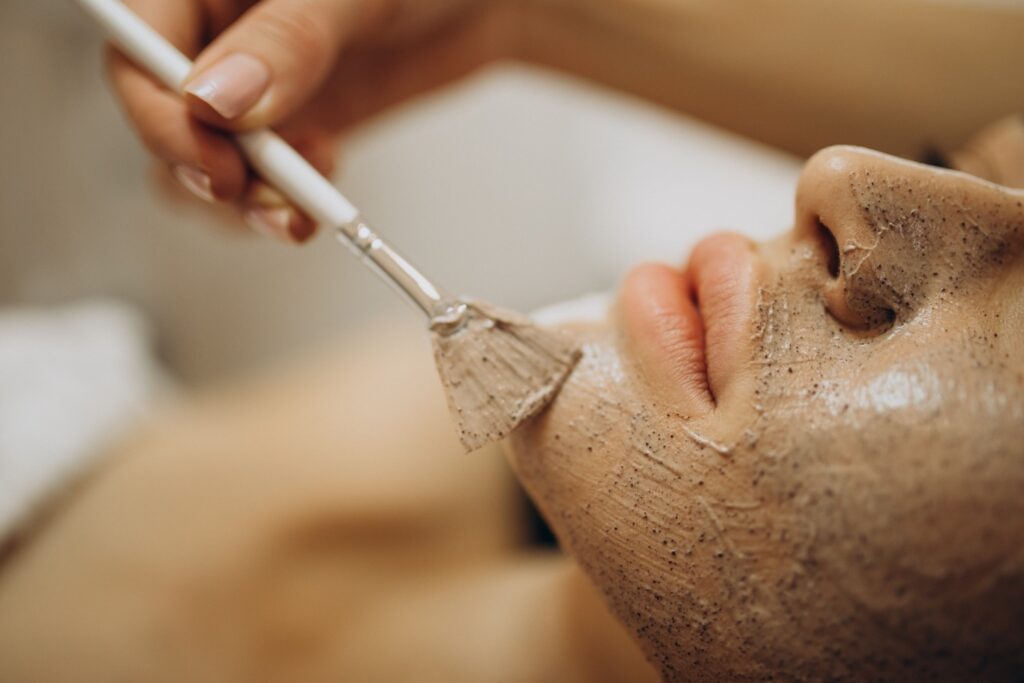
Single treatments work. Sequenced treatments compound.
We don’t stack treatments because more is better. We stack them because one creates the conditions for the next to work harder. Three pairings we use at Nios:
Dermaplaning + targeted serum. Dermaplaning lifts vellus hair and surface dead cells in one pass. The cleared canvas lets the brightening or peptide serum that follows reach the skin uniformly—not catch on hair or texture. Same session, two stacked benefits.
Chemical peel + barrier-repair facial. Peels strip the damaged surface (AAD). The follow-up restores the moisture and lipid balance that the peel disrupted. The half that comes after the peel is where the result actually shows up.
Diamond HydroDermabrasion + active serums. Water-and-vacuum action lifts dead cells while the skin stays hydrated, not stripped. Active serums applied right after get driven into skin that’s primed to absorb—not skin in repair mode. Same-day visible change, zero downtime.
Sequencing matters more than aggression. The wrong order doesn’t just waste a treatment—it can irritate skin that would have responded well to a different protocol.
Skin type isn’t a marketing category. It’s a biology constraint that determines what’s safe and what works.
The most common mismatch we see: treatments designed for fair, sun-damaged skin applied to higher-melanin skin. The result is post-inflammatory hyperpigmentation (AAD) that takes months to fade—sometimes doesn’t fully. We’ve built our facial protocols for all skin tones from the start. Not as a marketing position. As a safety standard.
Quick reference for which treatments fit which skin:
| Skin Type / Concern | Best Treatment Options | Avoid |
|---|---|---|
| Sensitive / Rosacea | Enzyme peels, gentle hydrating facials | Mechanical exfoliation, strong acids |
| Oily / Acne-Prone | Salicylic peels, regular extractions | Over-drying treatments |
| Dry / Mature | Hydrating treatments, gentle peels | Frequent mechanical exfoliation |
| Darker Skin Tones | Chemical peels (properly formulated), Diamond HydroDermabrasion | Intense laser treatments |
| Sun Damage | Glycolic peels, vitamin C treatments | Harsh scrubs |
| Melasma | Gentle acids, professional-grade brightening | Heat-generating treatments |
What looks like sun damage to a mirror often turns out to be melasma (AAD) under a clinical evaluation. Same brown patches, completely different treatment protocol. Heat-generating treatments—even gentle ones—can make melasma worse. This is why we assess before we book.
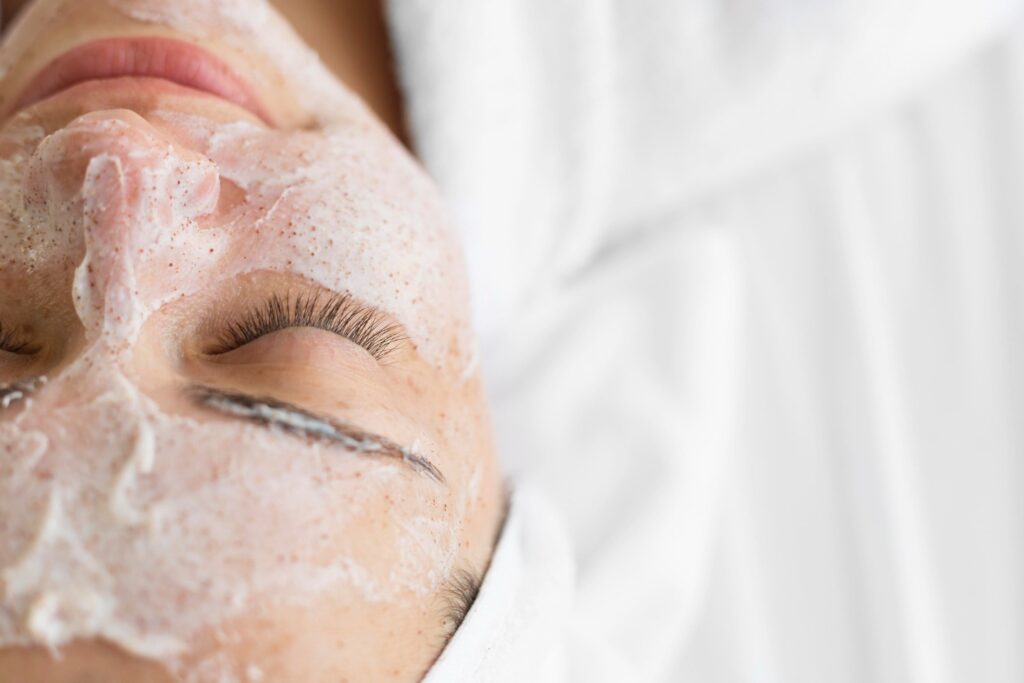
Some treatments build slowly. Some show up the week of your session. Both have a place, depending on what you need and what your calendar allows.
The biggest visible shift from a single session. A resurfacing peel addresses pigmentation that’s accumulated over decades. You’ll peel visibly for several days—this is the trade-off—and the result is brighter, more even, smoother skin once healing completes.
Best for: sun damage, age spots, fine lines, surface texture irregularities.
Our signature anti-aging protocol uses electroporation to drive active ingredients into deeper skin layers without disrupting the surface barrier. No peeling, no downtime, results visible in a single session and compounding over a series.
Best for: people who can’t take downtime, hormonal skin changes, maintenance-mode clients.
A precision blade lifts vellus hair and surface dead skin cells in a single pass. The result is an immediately smoother surface, makeup that sits cleanly instead of catching, and dramatically better absorption of anything applied afterward. Zero downtime—you can do it on a lunch break.
Best for: dull or uneven texture, peach fuzz that catches light or makeup, anyone preparing skin before a major event.
Combines water-and-vacuum exfoliation with active serum infusion in the same session. Hydrating rather than stripping—suitable for sensitive skin types that can’t tolerate stronger exfoliation. Cumulative effect over a series of sessions, with visible brightening from session one.
Best for: gradual, no-downtime improvement; sensitive or dehydrated skin; clients building a long-term skincare rhythm.
Professional skincare isn’t a luxury upgrade or an age threshold. It’s the right next step when your at-home routine has reached its biology limit. The question isn’t whether you “need” professional treatments—it’s whether the change you want is achievable with the products in your bathroom. Past a certain point, it isn’t.
If you’re not sure where you are on that line, that’s exactly what a consultation is for. At Nios Skin Lab, we assess your skin’s current state, ask what you’re actually trying to change, and map a protocol—usually three to six months—that gets you there. No packages, no quotas, no pressure to pre-pay anything. Just a plan.
Most clients come in thinking they need something dramatic and leave with a simpler protocol than they expected. Occasionally the opposite. Either way, the recommendation is based on your skin—not our schedule.