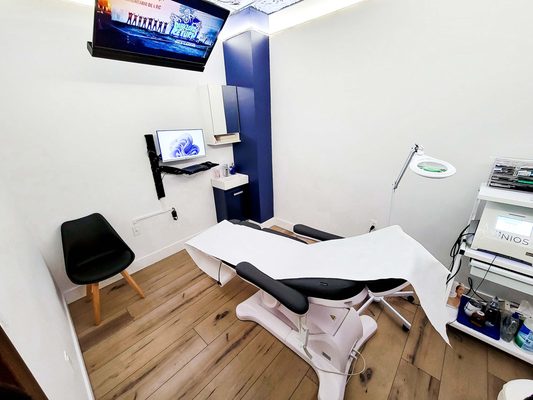
PCOS & Unwanted Hair Growth
We treat many female clients who come in seeking permanent hair removal for unwanted hair…

The hormonal link nobody quite explains—and what to do about the hair while you sort out the cause.
If new facial hair has appeared alongside other changes you can’t quite explain—fatigue, weight shifts, mood, hair thinning on your head—your thyroid is worth a conversation with your doctor. The connection between thyroid function and unwanted facial hair is real but indirect, frequently overlooked, and genuinely confusing because the thyroid is better known for making hair fall out than for making it grow. Here’s the honest picture.
One thing up front: this post explains the link and what helps, but it is not a diagnosis. If you suspect a thyroid issue, the first and most important step is a doctor and a blood test—not a hair-removal appointment. We’ll come back to why.
It can—but indirectly, and it’s not the thyroid’s most common effect on hair. The clearest, best-documented link between thyroid dysfunction and hair is actually hair loss—shedding and thinning on the scalp, in both overactive and underactive thyroid conditions. The facial-hair side is subtler. When thyroid function is off, it can disrupt the broader balance of sex hormones, and in some people that disruption lets androgens (the hormones that drive coarse, dark hair) have more influence—nudging fine facial hair to become more noticeable on the chin, upper lip, or jaw. So it’s a knock-on effect of hormonal disruption, not a direct “thyroid grows beard” switch.
The practical takeaway: thyroid issues belong on the list of possible contributors to unwanted facial hair, alongside the more common drivers—but they’re usually not the first or only cause, which is exactly why this needs a doctor to untangle.
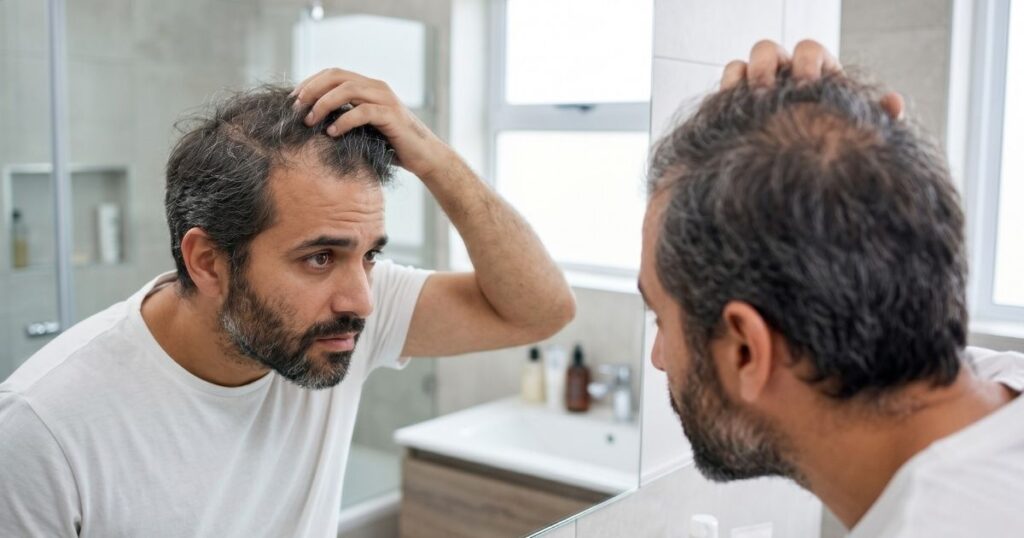
Two reasons. First, the thyroid’s reputation works against it: because it’s so associated with hair loss, few people connect a new chin hair to their thyroid. Second, the symptoms overlap with everything. Fatigue, weight changes, mood shifts, and skin or hair changes are common to many conditions, so the picture is rarely obvious from any single symptom. Facial hair that shows up with that broader constellation is a reason to look at the whole hormonal picture, thyroid included—rather than treating the hair in isolation.
Because thyroid-related facial hair is a symptom of an underlying imbalance, the right first move is medical: a doctor can run thyroid panels and hormone tests, identify whether your thyroid (or something else, like PCOS) is involved, and treat the root cause. Treating the underlying thyroid condition is the part that addresses your overall health—and in some cases, resolving the imbalance slows further new growth. We can’t say that strongly enough: see a doctor before you assume anything about the cause. Hair removal addresses the hair, not the condition behind it.
Here’s the frustrating part, and the reason hair removal still matters. Getting your thyroid back into range is essential for your health, but it does not reliably remove facial hair that has already established itself. Once a follicle has been pushed to produce coarse, dark hair, treating the hormonal cause doesn’t necessarily reverse that follicle—much the way managing the hormones in PCOS or menopause doesn’t undo the hair already there. So many people find they’ve done everything right medically and the facial hair is still showing up in the mirror. That gap—between treating the condition and removing the hair—is where hair removal comes in.
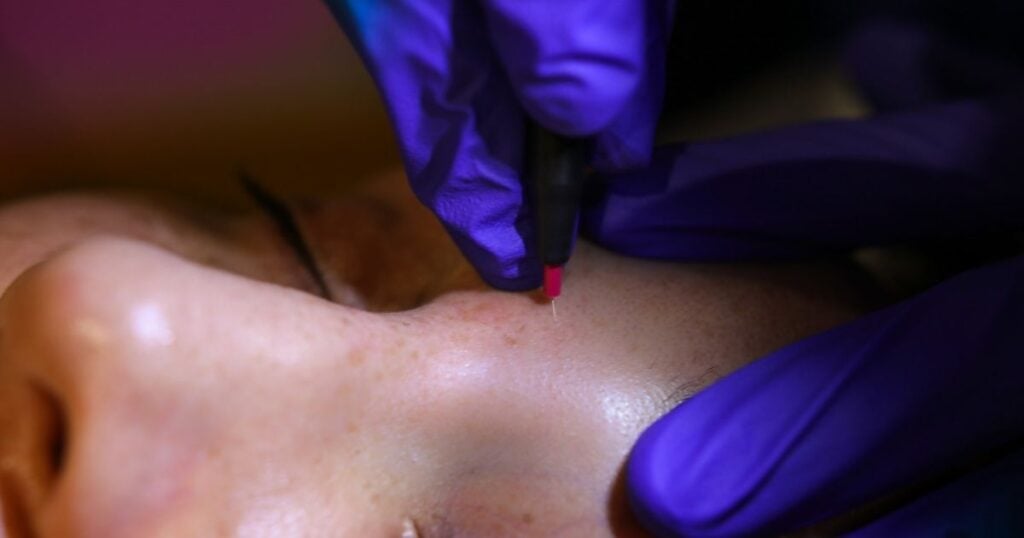
For hormonally driven facial hair, electrolysis is the method built for the job. A fine probe enters each follicle and a controlled current disables its ability to regrow—permanently closing that follicle regardless of the hormonal background that activated it. Two things make it especially suited to thyroid- and hormone-related growth. First, it works follicle by follicle, which suits the scattered, mixed-texture hair hormones tend to produce on the chin and upper lip. Second, because it targets the follicle mechanically rather than chasing pigment, it works on fine, light, and gray hairs that other methods miss.
One honest caveat that applies to all hormonal hair: electrolysis permanently closes the follicles it treats, but if the underlying hormonal driver is still active and switching on new follicles, new hair can appear over time. That’s why managing the thyroid condition with your doctor and addressing the hair with electrolysis work best together—one slows what’s coming, the other removes what’s here. We track what’s closing versus what’s newly active and adjust as we go.
Will treating my thyroid make the facial hair go away?
Think of it as two jobs. Your doctor manages the condition and what is coming, electrolysis removes what is already there, and they complement each other. Book a consultation once you are working with your doctor and we map the hair side around your situation.
Should I see a doctor or book electrolysis first?
We would genuinely rather you start with your physician, because that is the step that protects your health rather than just your skin. When you are ready to deal with the hair itself, we work in step with your medical care.
Can electrolysis treat fine or light thyroid-related hair?
The mixed, fine, sometimes-light hair that hormones produce is exactly the profile that frustrates laser and at-home devices. Electrolysis has no such blind spot, and your specific hair gets assessed at the consultation.
Is thyroid-related facial hair the same as hirsutism?
Whatever the label or the source, the follicle-level solution stays the same: close the follicles producing the unwanted hair. We focus on that while your doctor handles the diagnosis.
If facial hair is part of a bigger picture, start with your doctor—get the thyroid and hormones checked and the underlying cause treated. When you’re ready to address the hair that’s already there, electrolysis is the permanent option built for hormonally driven, mixed-texture facial hair, across every skin tone and hair color. Nios Skin Lab has specialized in electrolysis since 2009 across Manhattan, Brooklyn, and Astoria.
Working with your doctor on the cause? Book a free consultation and we’ll handle the hair—in step with your medical care.