Compare Electrolysis vs. Laser Hair Removal
Permanent Hair Removal vs. Permanent Hair Reduction
Which method actually finishes the job, where laser fits, and how to plan around HRT and surgery dates.
If you’ve started researching hair removal as part of your transition, you’ve probably hit the same wall of conflicting advice everyone does. One clinic says laser, another says electrolysis, a forum thread says do both, and none of them explain why. So here’s the straight version—what each method actually does to the follicle, which one holds up against the hair that matters most, and how hormones and surgery timing change the plan.
This isn’t about vanity, and it isn’t a spa decision. For a lot of trans and gender-diverse people, facial hair is the thing that shows up in mirrors, photos, and daily routines—and the method you choose determines whether you’re finishing it or just managing it for years. Worth getting right the first time.

The whole decision rests on one distinction the marketing tends to blur. Laser is generally FDA-cleared only for permanent reduction; electrolysis is permanent removal—and those are different outcomes, not synonyms.
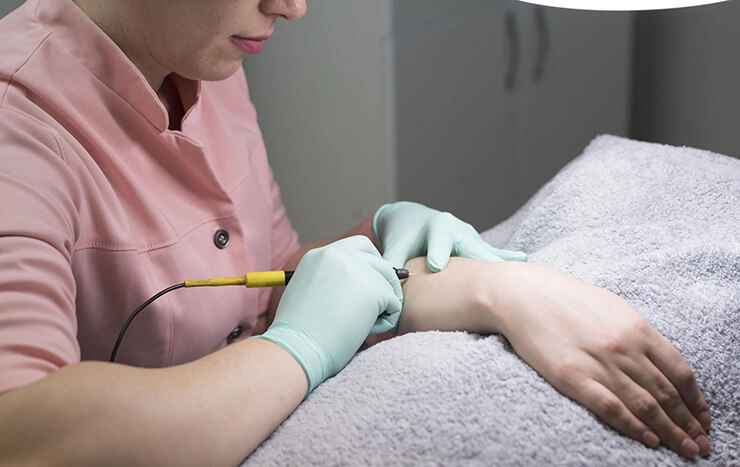
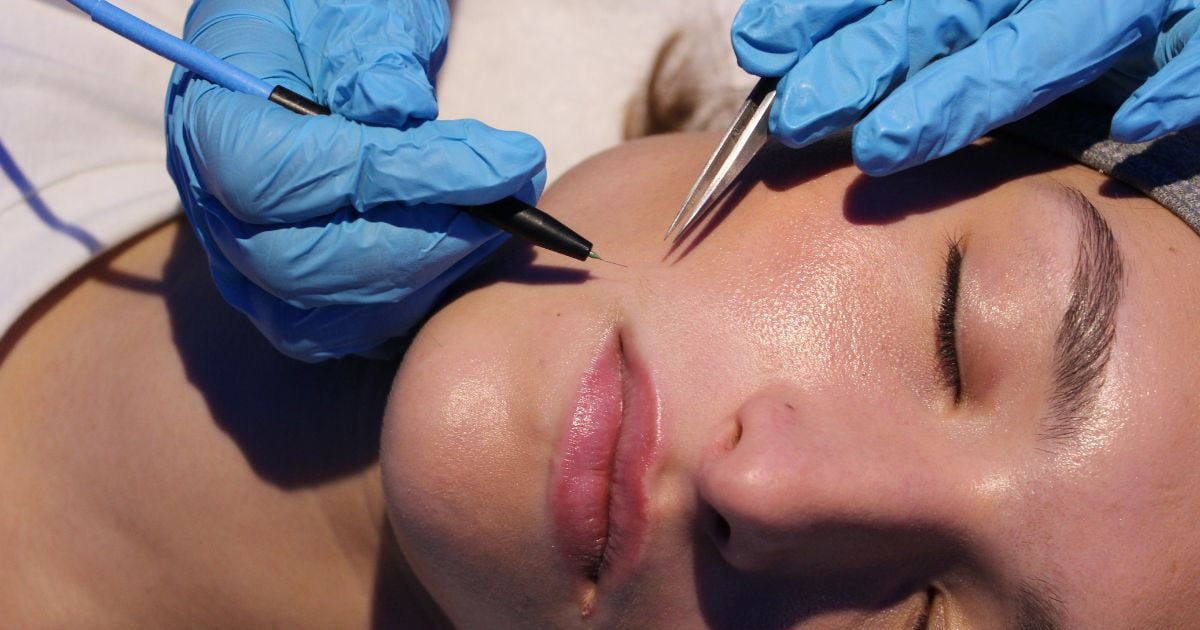
Laser targets the pigment in the hair shaft. Where there’s strong contrast—dark, coarse hair against lighter skin—it damages follicles efficiently and clears bulk fast, getting most people to substantial reduction across large areas. But it depends on that pigment, and it can’t claim to remove hair permanently. Electrolysis works differently: a fine probe enters each follicle and a controlled current disables its ability to regrow, one follicle at a time. Because it targets the follicle mechanically rather than chasing pigment, it works on every hair color and every skin tone—and it’s the only method recognized for permanent removal.
Facial hair—beard shadow, upper lip, chin, jawline, neck—is usually the highest-priority area, and it’s also where laser’s limits show most. Three reasons electrolysis is the recognized standard for facial work:
Mixed color and texture. Beard-area hair is rarely uniform. There are coarse dark hairs alongside finer, lighter, and gray ones—and laser simply can’t see the hairs without enough pigment. Electrolysis closes all of them regardless of color, which is why it finishes a face laser leaves patchy.
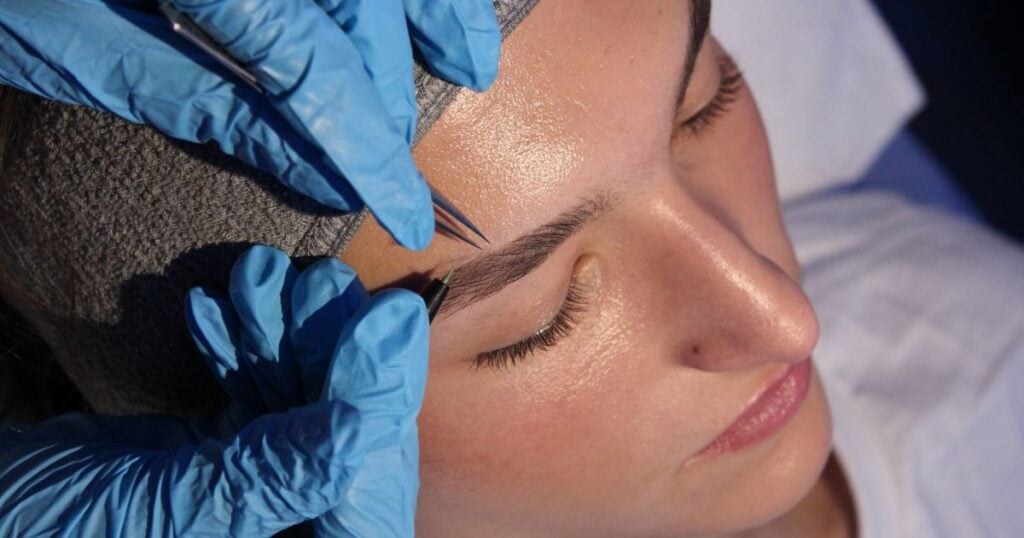
Precision. Treating one follicle at a time means exact control over hairlines, sideburn edges, and brow shaping—without over-treating the skin around them. That precision matters far more on a face than on a leg.
Permanence where you want it most. For the area you look at every day, “significantly reduced” and “gone” are not the same psychological outcome. Electrolysis offers follicle-level permanence; the treated hair doesn’t return.
None of this means laser is useless—it means laser is a tool with a job. For large body areas with dense, dark hair (chest, back, full legs), laser clears bulk quickly and at a lower per-session cost than treating every follicle individually. The common, sensible approach is sequential: laser handles the body where it’s efficient, and electrolysis does the facial work and finishes anything laser leaves behind. If you’ve already done laser and still have stubborn hairs, that’s expected—the survivors are usually the light and fine hairs laser was never able to target, and they’re exactly what electrolysis is built for.
A common misconception is that hormones will eventually take care of facial hair, so you should wait. They won’t, and you shouldn’t. For trans women and transfeminine people on estrogen, HRT softens and slows new growth and reduces androgen-driven density over time—but it does not close follicles that are already established, and it’s unlikely to remove existing coarse facial hair. Those follicles stay put until something closes them.
There’s a practical upside to starting electrolysis while on HRT rather than waiting: as hormones slow the activation of new follicles, each session does more net work, because fewer new hairs are arriving to replace what’s been cleared. Running the two in parallel tends to be more efficient than holding off for a “stable” baseline that may never arrive on a tidy schedule. For transmasculine clients, testosterone increases growth—so the goal there is usually addressing specific areas that feel incongruent, rather than full clearance.
If gender-affirming surgery is on your horizon, hair removal timing becomes part of the surgical plan. Many procedures—most commonly genital surgery like vaginoplasty and phalloplasty—require pre-operative hair clearance in the surgical area, and your surgical team will specify exactly what they need. Two timing realities worth knowing now: clearance protocols run over several months and are best started early, and most surgeons ask that you avoid facial or surgical-area hair removal within roughly six weeks of the operation so the skin isn’t irritated going in. The earlier you map it against your date, the more flexibility you keep.
For facial feminization specifically: facial hair removal isn’t always a hard prerequisite for the surgery itself, but it’s strongly recommended and often treated as part of comprehensive feminization—and FFS reshapes bone structure, it doesn’t remove hair, so the two address different things and are planned together.
Facial clearance is one of the longer electrolysis commitments, because beard hair is among the densest and most deeply rooted on the body. You’ll typically see hair get visibly sparser and finer within the first several months of consistent sessions, with full clearance of original growth depending on density, your growth cycle, and how HRT is shifting the pattern. It’s steady, compounding work in one direction—every follicle closed permanently exits the equation. The honest version: this takes time and consistency, and the results are worth the patience.
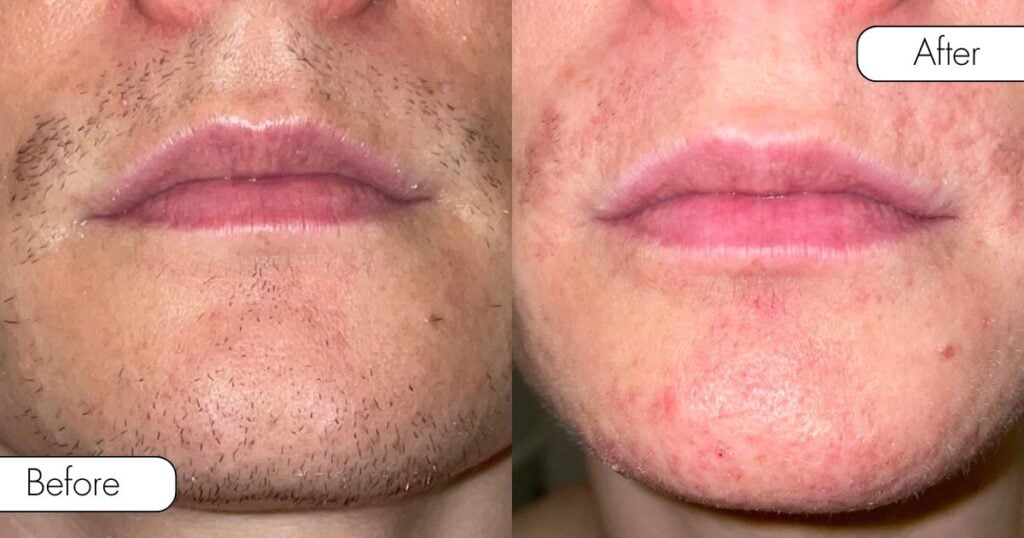
Is electrolysis or laser better for trans facial hair?
If permanent facial clearing is the goal, whether for dysphoria, surgical prep, or simply being done with it, electrolysis is the method that finishes. Laser gets you part of the way on the body, and electrolysis closes the face for good. A consultation builds the plan around your goals and your timeline.
Can I start electrolysis while I’m on hormones?
Running electrolysis and HRT in parallel often makes each more effective, because fewer new follicles activating means each session does more net work. We track what is closing against what is newly active and adjust the cadence as your pattern evolves.
Does HRT remove facial hair on its own?
Hormones and electrolysis do different jobs. HRT changes what grows going forward, electrolysis removes what is already there for good, and the sooner active follicles are closed, the sooner density starts dropping.
How far before gender-affirming surgery should I start hair removal?
Bring your surgical team’s clearance requirements and your surgery date, and we plan backward from there. Earlier is always better on this timeline, because the margin for delay is smaller than most people expect when they first book.
Should I stop tweezing or waxing before electrolysis?
Put down the tweezers and let us do the permanent work, because every hair pulled between sessions is a follicle we cannot close that visit. Shaving between appointments does not affect your results at all.
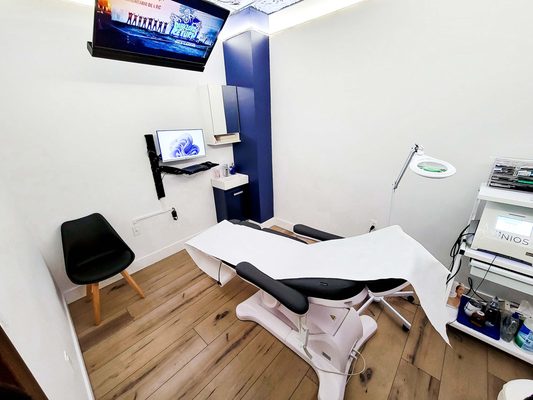
Wherever you are in your process—early, preparing for surgery, or finishing what laser started—the right plan begins with looking at your actual hair and goals, not a generic timeline. Nios Skin Lab has specialized in gender-affirming electrolysis across Manhattan, Brooklyn, and Astoria, working alongside surgeons and hormone specialists, with no assumptions and no theater—you tell us what you want done, and we build the protocol to do it.
Ready to map your plan? Book a free consultation—we’ll build it around your goals, your timeline, and where you are right now.