

A Fine Probe. A Controlled Pulse. A Follicle That Stops Producing.
A fine, sterile probe—no wider than the hair itself—is inserted into the follicle alongside the hair shaft. A controlled pulse of energy is delivered directly to the growth center at the base of the follicle, permanently destroying its ability to regenerate. The hair releases naturally. No cutting, no pulling, no damage to surrounding skin. The treated follicle is closed permanently—it cannot produce hair again. This happens one follicle at a time, with each insertion precisely targeted.
Hair Grows in Cycles. Electrolysis Has to Match That Rhythm.
Not all follicles are active at the same time. Hair grows in four phases: active growth (anagen), regression (catagen), rest (telogen) and shedding phase (Exogen). Electrolysis permanently closes follicles in the active phase. Follicles in regression or rest are dormant—they’re present but not producing, which means they can’t be effectively treated until they cycle back to active growth. This is why consistent appointments over time produce compounding results: each session closes another wave of follicles as they become active.

No Pigment Required. The Only Method That Treats Every Hair Type.
Laser depends on melanin contrast—it targets the pigment in the hair shaft and requires a significant color difference between hair and skin to function. Electrolysis targets the follicle structure with heat, independent of color. Blonde, gray, red, white, fine, and coarse hairs are treated identically to dark hair. Every skin tone is safely treated because the probe works at the follicle level, not the surface. There is no hair or skin profile electrolysis cannot address.

Reduction vs. Removal—and Why Electrolysis Is Permanent.
Electrolysis is permanent hair removal: it destroys each treated follicle’s growth center, so those hairs don’t grow back. Once closed by electrolysis, a follicle does not reopen. Laser and IPL devices are generally FDA-cleared only for permanent reduction because regrowth is documented—follicles can reactivate over time. The distinction matters when choosing a method for complete clearance, hormonally active zones, or hair colors and skin tones that laser cannot consistently treat.

Who is Electrolysis for?
Here’s when electrolysis could be for you or when to wait.
- Prioritize permanence. Done with “reduction” and temporary maintenance. You want the hair gone—forever.
- Have “laser leftovers.” Patchy regrowth, stubborn stragglers that other methods couldn’t finish.
- Have light hair. Blonde, gray, red, white, fine—hair laser can’t see.
- Have melanin-rich skin. Electrolysis targets the follicle, not pigment. Safe for all skin tones.
- Are battling hormonal growth. PCOS, menopause, genetics—we break the cycle.
- Have active cold sores or infections. Treatment area needs to fully heal first.
- Are taking Accutane/Isotretinoin. We require 6–12 months after stopping.
- Have a fresh sunburn. Skin needs to cool and repair first.
- Have keloids. Patch test + 4-week wait required.

Electrolysis vs Waxing vs Laser Hair Reduction
Waxing is temporary, laser is partial, electrolysis is permanent. Different tools, different results.
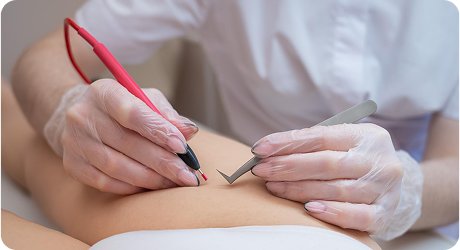
-
Perfect, individual-hair precision
-
Safe for all skin tones
-
Effective on all hair colors
-
Brief heat sensation
-
PERMANENT REMOVAL, NOT JUST REDUCTION
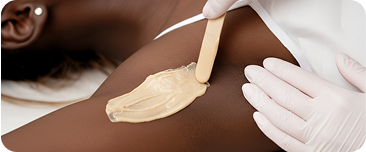
-
Approximate precision
-
All skin tones
-
All hair colors
-
Ripping sensation
-
Temporary results

-
Approximate (~½” applicator) precision
-
Struggles with dark & tan skin
-
Limited on light, gray, red, or fine hair
-
Snapping sensation
-
Permanent reduction
Electrolysis Results
See the visible reduction achieved through consistent electrolysis treatments over multiple sessions.
Results may vary depending on hair colors, treatment area, and consistency.
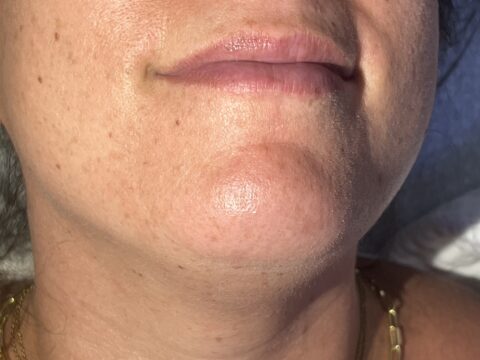 Before
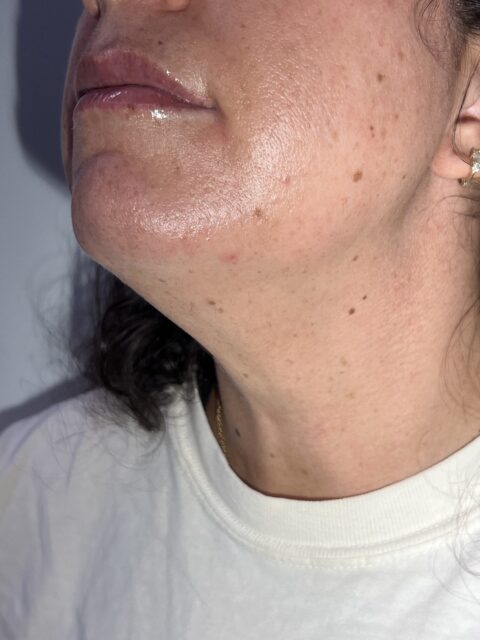 After 23 sessions
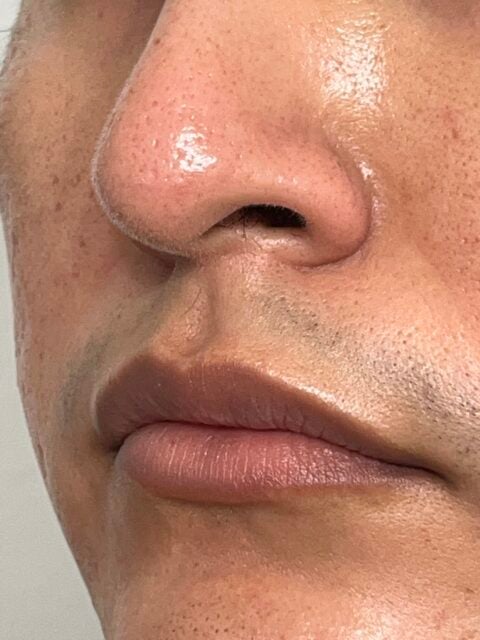 Before
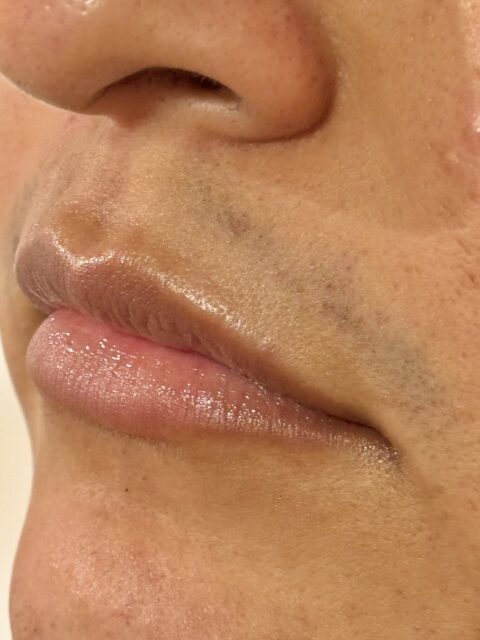 After 12 sessions
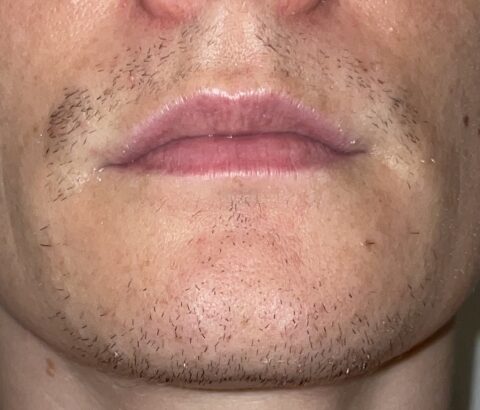 Before
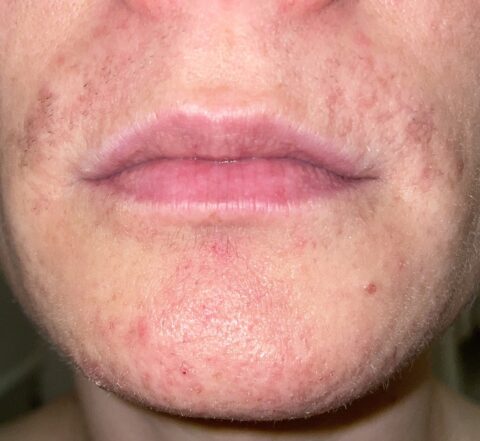 After 31 sessions
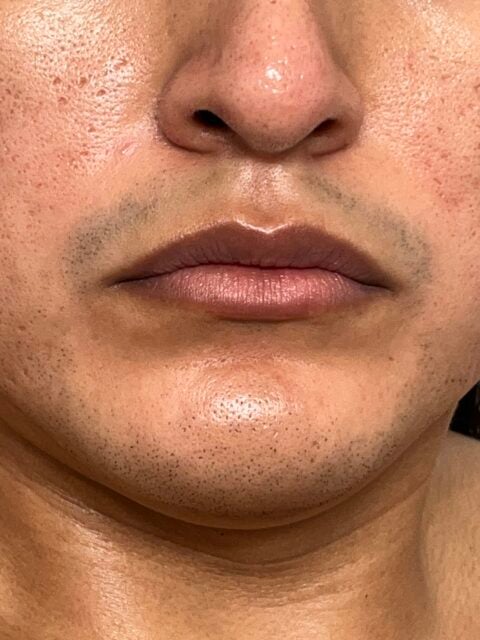 Before
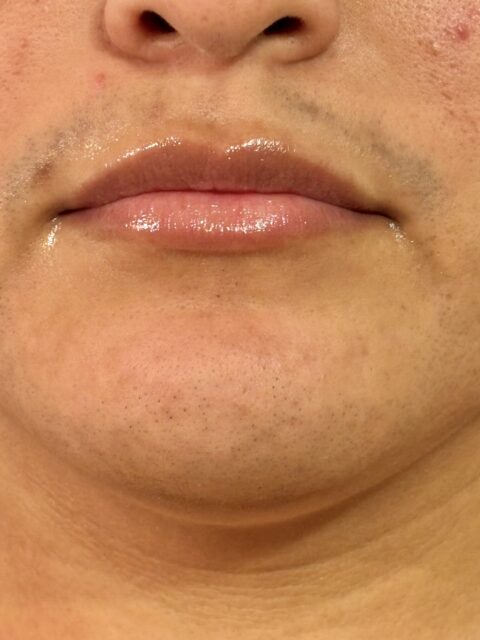 After 12 sessions
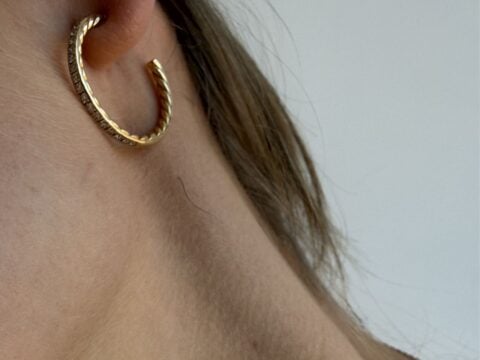 Before
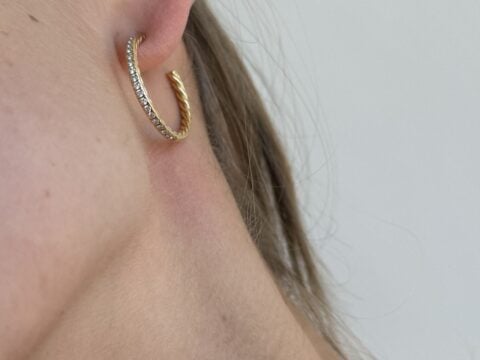 After 1 session
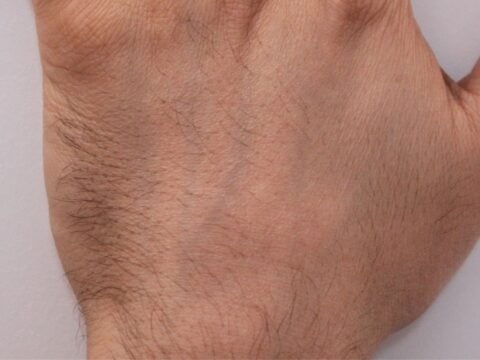 Before
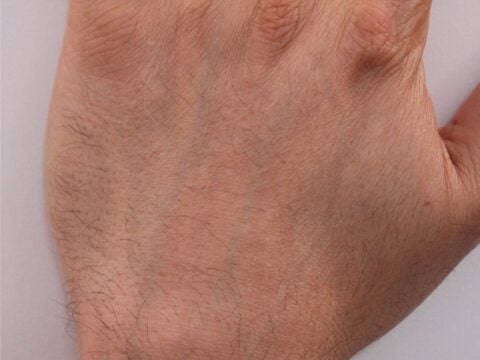 After 15 sessions
The NIOS Standard

-
M.D. Founded
Protocols designed by an M.D. We adhere to safety and hygiene standards that go beyond typical spa requirements.
-
Science,not sales
Our technicians are paid to clear your skin, not to upsell you. No quotas, no pressure—just results.
-
Clinical-Grade tech
Apilus xCell Technology. We use the fastest, most precise epilators on the market.
-
Rigorous training
Expert hands only. Hand-picked and continuously tested. We hire for precision and keep for kindness.
-
Open 7 days 9am–8pm
Locations across NYC with complimentary high-end sound healing systems. Your records sync across all of them, treat wherever is convenient.
The Team
We are a multidisciplinary team of licensed estheticians, electrologists, engineers, creatives, and more—sharing expertise across disciplines and united by a single goal: You.













































Your Questions,
Our Answers
-
What are the different types of electrolysis? Does Nios use a specific one?
There are three modalities: thermolysis (high-frequency heat), galvanic (chemical reaction in the follicle), and blend (a combination of both). Thermolysis is the most widely used in modern practice—it’s faster, consistent, and well-suited to most hair types and zones. Galvanic is slower but effective for the most stubborn, curved, or deeply embedded follicles. Blend combines both mechanisms for challenging cases. Nios uses the modality most appropriate to each client’s hair type, zone, and skin profile, determined at the consult.
Concierge Note:
The modality question is more relevant to your esthetician’s decision than yours—it’s a technique tool, not a client preference. What you’re choosing is the practitioner and the protocol, not the machine setting. At your Nios consult, we assess your hair and skin profile and work with what’s most effective for your specific situation. Most clients don’t need to think about modality—just results. -
How is electrolysis different from laser?
Laser targets melanin—it uses pigment contrast between the hair shaft and surrounding skin to deliver energy to the follicle. This makes it effective for dark hair on light skin and ineffective for light, blonde, gray, or red hair. Laser is generally FDA-cleared only for permanent hair reduction—regrowth is possible. Electrolysis targets the follicle with heat regardless of pigment, works on every hair color and skin tone, and is permanent hair removal—treated follicles do not regenerate. See [Laser vs. Electrolysis →] (/laser-vs-electrolysis-permanent-hair-removal) for the full comparison.
Concierge Note:
The practical difference: laser is faster for large areas with the right hair and skin profile, but it has a ceiling. Electrolysis takes longer per session but closes every follicle it treats, permanently, on every person. For anyone with light hair, mixed-color growth, darker skin, or hormonally driven hair—electrolysis isn’t the backup plan. It’s the right one. -
Does electrolysis work on ingrown hairs?
Yes—electrolysis is one of the most effective permanent treatments for chronic ingrown hairs and razor bumps. Ingrowns occur when the hair shaft re-enters the skin after removal rather than clearing the surface. Electrolysis permanently closes the follicle, which eliminates the source of the ingrown rather than treating the surface symptom. Once the follicle stops producing hair, there’s nothing to grow back into the skin. For clients with chronic pseudofolliculitis barbae (razor bumps), permanently closing the follicles in the affected zone removes the recurring cause.
Concierge Note:
Topicals, exfoliation, and bump pads manage the symptoms. Electrolysis removes the cause. Most clients dealing with chronic ingrowns find the treatment faster and more efficient than expected—the zone is usually specific and the follicle count contained. See our Ingrown Hair & Razor Bumps page for the full context and clinical picture. -
Can hair grow back after electrolysis?
A successfully treated follicle cannot regenerate. Once the growth center is permanently destroyed, that follicle stops producing hair. However, two things can create the appearance of regrowth. First, follicles that were dormant (in telogen phase) during a treatment session will cycle back to active growth and appear as new hairs—these need to be caught in subsequent sessions. Second, new follicles adjacent to treated ones can activate over time, particularly in hormonally influenced zones. Both are addressable; neither means the treated follicles have regrown.
Concierge Note:
“Is this coming back?” is the most common question after early sessions. The answer is usually: no, the treated follicles aren’t coming back—what you’re seeing is dormant follicles cycling active for the first time. This is why consistent sessions produce compounding results. Most clients find the hair density visibly dropping in the treated zone session by session, even as some new hairs appear. That’s the process working, not failing. -
How long does a full electrolysis protocol take?
It depends entirely on the zone, hair density, and whether hormonal factors are driving ongoing follicle activation. Small precision zones—ears, brows, upper lip, knuckles—can clear in a handful of sessions over a few months. Larger zones—back, legs, full beard clearance—take longer, often twelve to twenty-four months of consistent treatment. Hormonally active zones like chin, neck, and jawline require sustained protocols because new follicles can activate during treatment. Every timeline estimate at Nios is based on what we observe at your consult—not a generic range.
Concierge Note:
The range sounds wide because it genuinely is—a few brow strays and a full back clear are different problems. The useful number is the one we give you after seeing your hair in person. Think compound interest: the early sessions do the heaviest lifting and each subsequent session builds on that foundation. Most clients find their protocol shorter than the outer bound of the range once actual density is mapped. Book a consult and we’ll give you a specific, honest scope. -
Is electrolysis safe? What are the risks?
Electrolysis has a well-established safety record—it’s been used clinically since the 1870s. Temporary redness and mild swelling around treated follicles are normal inflammatory responses and settle within hours for most clients. Scarring is rare and typically associated with improper technique or aggressive energy settings. At Nios, we calibrate energy conservatively, particularly on sensitive facial skin, and pace sessions around the skin’s recovery. We don’t rush the result at the expense of the skin.
Concierge Note:
The safety question is worth taking seriously before any permanent procedure. The short answer: properly performed electrolysis on healthy skin carries minimal risk. The longer answer is in the consult—where we look at your skin, your history, and any factors that might affect how we approach your specific protocol. If you’ve had reactions to other treatments in the past, that’s exactly the kind of information that shapes how we work. Ask your esthetician directly.
Related Solutions
Many similar clients also treat
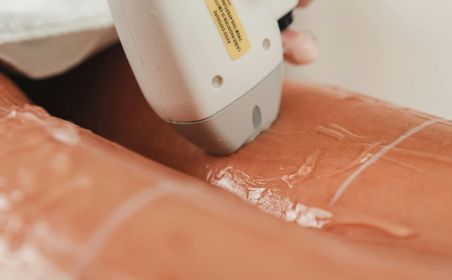
After Laser Didn’t Work
Laser has a pigment ceiling. If your hair came back, never cleared, or got worse after laser treatment—electrolysis targets the follicle directly.
Learn More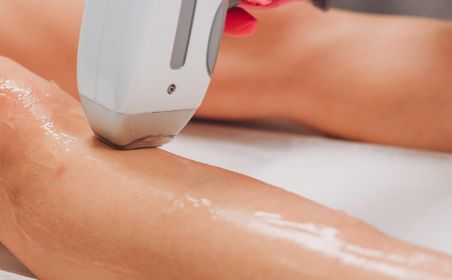
Laser vs electrolysis permanent hair removal
Both are marketed as permanent. Laser is generally FDA-cleared only for permanent hair reduction; electrolysis is permanent hair removal.
Learn More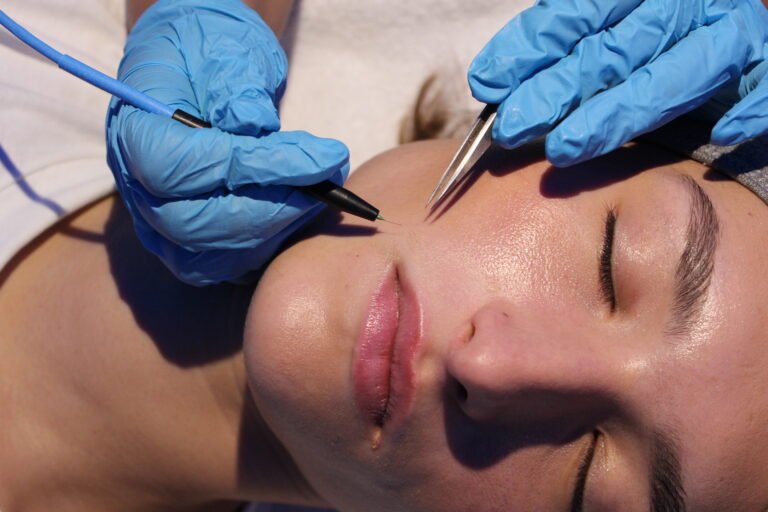
Electrolysis
Learn MorePricing
Electrolysis
Pricing goes by time
Junior Technician
$0
Senior Technician
$0
All Nios electrologists receive the same rigorous training. Senior electrologists offer more years of hands-on experience.
How Much Time Do I Need?
Electrolysis is billed by time, not body part, since every client’s hair density and treatment area are different.
-
Small areas
Lip, chin, eyebrows, fingers: ~5–30 minutes
-
Medium areas
Underarms, bikini: ~30–60 minutes
-
Large areas
Legs, chest, back, etc.: 60 to 120+ minutes
The exact timing varies from person to person — for example, underarms may take 30 minutes for one client and a full hour or more for another.
The best way to know what your treatment plan will look like is to book a free consultation, where we can assess your hair in person and give you a personalized estimate.
How many sessions do I need?
Hair grows in cycles—only active follicles can be treated, so multiple sessions are required. Most clients achieve permanent results within 12–18 months: twice a month at first, then monthly as hair thins.
Book a free consultation for a personalized estimate.
Client Testimonials


